



A recent meeting of the ABES Artificial Intelligence Committee had the special participation of Fabio Eon Soares, Coordinator of UNESCO's Human and Social Sciences and Natural Sciences Programs in Brazil, who shared the actions and perspectives regarding AI technologies.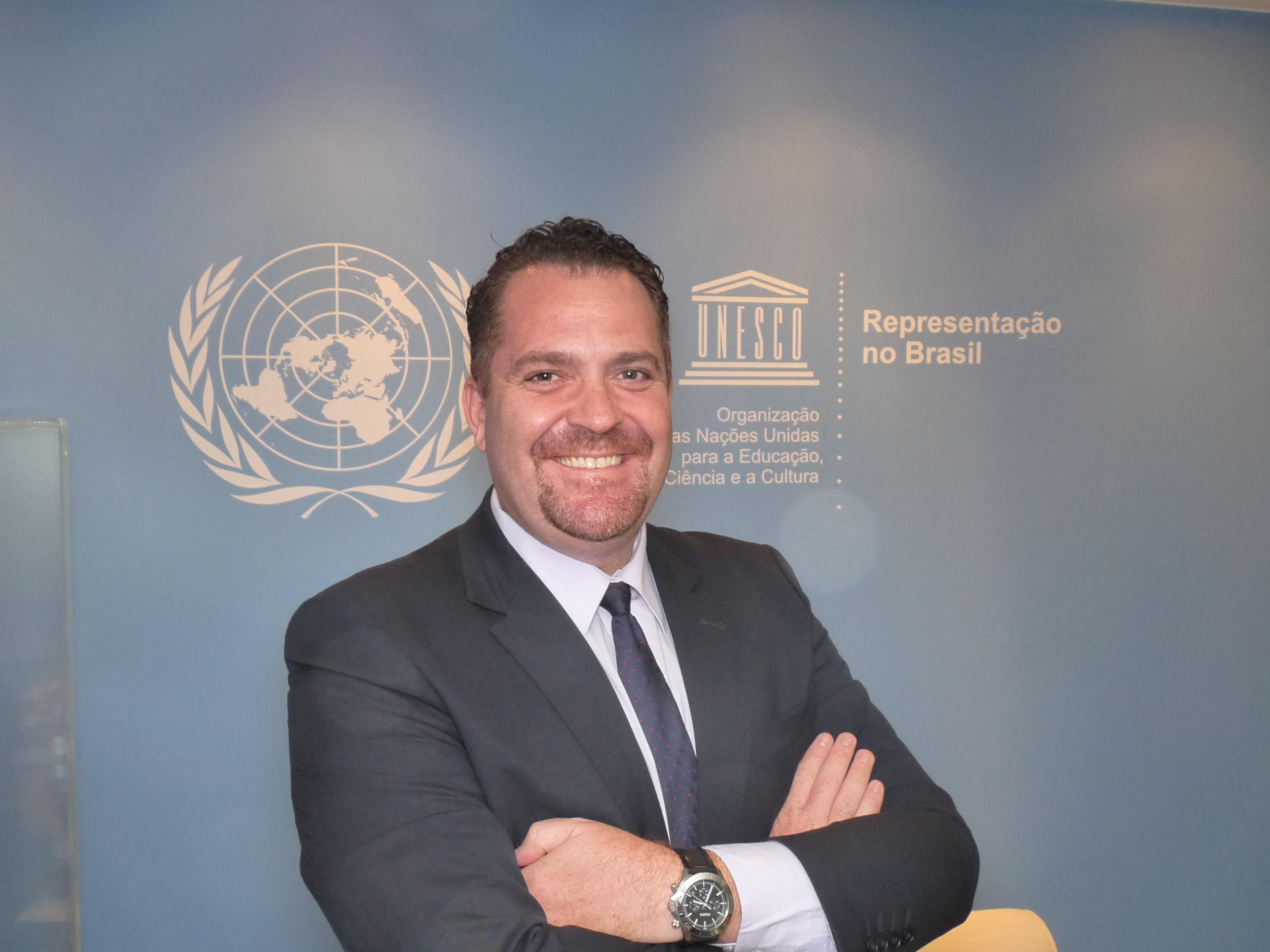
Fabio Eon explains that the United Nations Educational, Scientific and Cultural Organization (UNESCO) – in its role as the technical agency of the United Nations for the issues conferred since its creation in 1945 – has been leaning more and more, at the request of its 193 member countries, in discussions on ethics in science and other important facts of everyday life.
In addition to supporting its countries in the formulation of policies and programs on issues of education, science and culture, UNESCO has also acted in recent decades as an important neutral and multilateral forum to formulate international conventions, declarations or recommendations that can help countries- UN members in universal and internationally widely discussed parameters. UNESCO has already helped countries with important international milestones and references in ethical matters, including the Universal Declaration on Bioethics and Human Rights (2005) and the Recommendation on Science and Scientific Research (2017), which deal with ethical principles in science. Check out the interview conducted by the ABES Portal with Fabio Eon Soares below.
– How does UNESCO assess the popularization of AI-based applications?
While AI technologies have extraordinary value for social and economic development, they also pose complex and unique challenges for policymakers. AI – as a recent phenomenon and still little studied or regulated – raises significant concerns about prejudices, stereotypes and other forms of discrimination, not to mention the possibility of exacerbating some of the inequalities and asymmetries existing in our society. We know, for example, that higher-income countries tend to enjoy the benefits of new technologies better, and we believe that it is crucial to ensure that people have broad access to the potential of new technologies and, most importantly, that they are used for legitimate and peaceful purposes.
– Is there any area of AI that requires more attention? (eg facial recognition, health, public safety etc.)
This is not, therefore, about disqualifying the potential of AI, on the contrary. We broadly recognize her enormous contribution to new education systems, climate tracking and natural disaster prevention models, and so many other applications that make our lives safer, more productive and even more fun. But it is quite true that – as for any new technology – there are issues that need to be better worked on and improved. It is not up to us, as UNESCO, to say what is the correct use or not of AI, but it is widely reported that some failures, deviations or adverse results are sometimes verified, as in facial recognition software widely used around the world or other fields where algorithms tend to induce misinterpretations. Our biggest concern is with programming biases or effects that end up generating more harm than good. In other words, you shouldn't blame the technology. AI is neither good nor bad in itself. Its use by human beings should be better monitored. Similarly, one should not blame a car for speeding, for example, but rather the driver for recklessness and poor driving.
– Can you explain UNESCO's main recommendations for AI applications? Is there a website that can be accessed for interested parties to obtain more information?
In this sense, since more and more decisions in the public and private spheres are being made based on the analyzes produced by the AI, UNESCO defends that AI be developed in a way to guarantee fair and transparent results. That is why, in 2020, UNESCO created a working group with 24 international experts in AI to debate a proposal for an international recommendation that would inspire UN member countries at this exact moment when national regulatory frameworks are being discussed and approved at the national level.
In a broad process of consultation and participation, UNESCO has received more than 50,000 contributions to the base text of the Recommendation which includes provisions to ensure that real-world biases are not reproduced online. The recommendation will still be officially approved at the UNESCO General Conference in November 2021, but we believe that countries will adopt the text in its entirety, as well as endorse its ten principles linked to (1) proportionality, (2) security, (3) fairness and non-discrimination, (4) sustainability, (5) privacy and data protection, (6) human oversight, (7) transparency and reasonable explanation, (8) accountability and accountability, (9) awareness (awareness) and media literacy (media), (9) global governance and collaboration multi-stakeholder.
More information and UNESCO content on the topic, including videos and other materials, can be accessed at https://en.unesco.org/artificial-intelligence.
– How does Unesco assess the AI regulation initiatives underway in various countries?
We believe that countries are making good progress in debating this issue in legitimate and participatory spheres, such as the legislature, specialized forums and academic circles. Several national strategies are already being developed and Brazil launched its own Brazilian Strategy for Artificial Intelligence (EBIA) with guidelines to guide public policies in the development and use of artificial intelligence. The initiative is from the Ministry of Science, Technology and Innovation and was instituted by MCTI Ordinance No. 4.617 (April 6, 2021) and had - among other contributors - the help of UNESCO consultants who helped highlight ethical concerns in the use of AI . In addition, important international references are beginning to emerge in this discussion, such as the UNESCO Regional Center for Studies for the Development of the Information Society (CETIC), maintained by the Ponto BR Information and Coordination Center (NIC.br) in São Paulo, and the new UNESCO International Research Center on Artificial Intelligence (IRCAI), maintained by the government of Lithuania, one of the countries that has made considerable progress in these discussions.