



Through the data, "SpaceCows" will allow the monitoring of herds in the Australian Top End for decision-making focused on environmental, cultural and economic factors
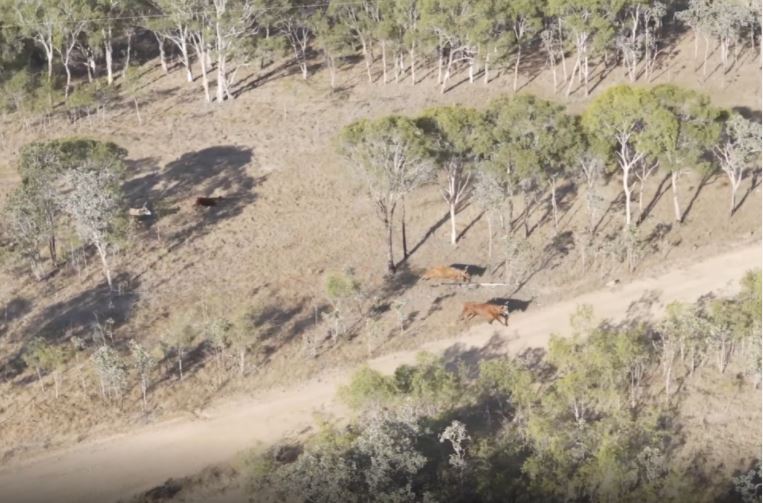 Currently, wildlife – mainly buffaloes and livestock – is a threat to the ecology and economy of northern Australia, specifically in the Top End. To address this, a new approach, which brings together indigenous knowledge, space technology and artificial intelligence, is being developed with the aim of creating the largest remote herd management system in the world. The project SpaceCows, developed by the Commonwealth Scientific and Industrial Research Organization (CSIRO) and Microsoft, aims to create new economic, environmental and cultural opportunities, as well as architecting proven 'best practices' for management, using AI and space technology.
In the project, the animals will be tracked over a combined area of more than 22,000 square kilometers, mainly covering indigenous lands. Instead of using conventional wireless technology, which does not adapt to the natural topography and hostile environment in the far north of Australia, data will be collected using a network of 25 Kinéis IoT nanosatellites at 650 km altitude, stored in the cloud with Azure, and Microsoft is also developing AI algorithms and machine learning pipelines that will act as the digital foundation for the program.
“The key to doing this efficiently and cost-effectively is using satellite-based radio technology. With our partners, we are building tags (physical markers) that are linked to satellites, which send the location, activity, temperature, humidity and some other data and then relay that information through the IoT system of the Kinéis satellites” says Dr. Andrew Hoskins, research scientist at CSIRO.
Artificial intelligence will interpret the data and provide predictions to indigenous rangers using dashboards from Microsoft's Power BI data platform. This will allow targeted action to control wildlife in order to protect the environment and important cultural sites. This approach also creates economic opportunities, allowing for ethical harvesting and marketing of these animals.
Using animal movement data to create observed distributions and then cross-referencing with environmental data – including climate – allowed the development of a series of scenario models that reflect real assumptions, which aid in decision making. In addition to supporting local capacity in the ethical gathering and management of cattle and buffaloes, the program will develop educational training, expanding digital skills and in-country employment opportunities for indigenous people.
In the future, SpaceCows learnings can contribute to other initiatives aimed at tackling the challenges of wild animals such as donkeys, goats and pigs. Researchers are also exploring other innovations such as Microsoft's Planetary Computer feature, which combines global environmental data with intuitive APIs that can help accelerate the development of local solutions.