



– After three decades of operating with local infrastructure, the company is migrating SAP ERP to SAP S/4HANA RISE, aiming for gains in efficiency, scalability, and tax compliance.
Project OJI S/FOUR lasted 342 days and reduced the data base from 7 TB to 200 GB.
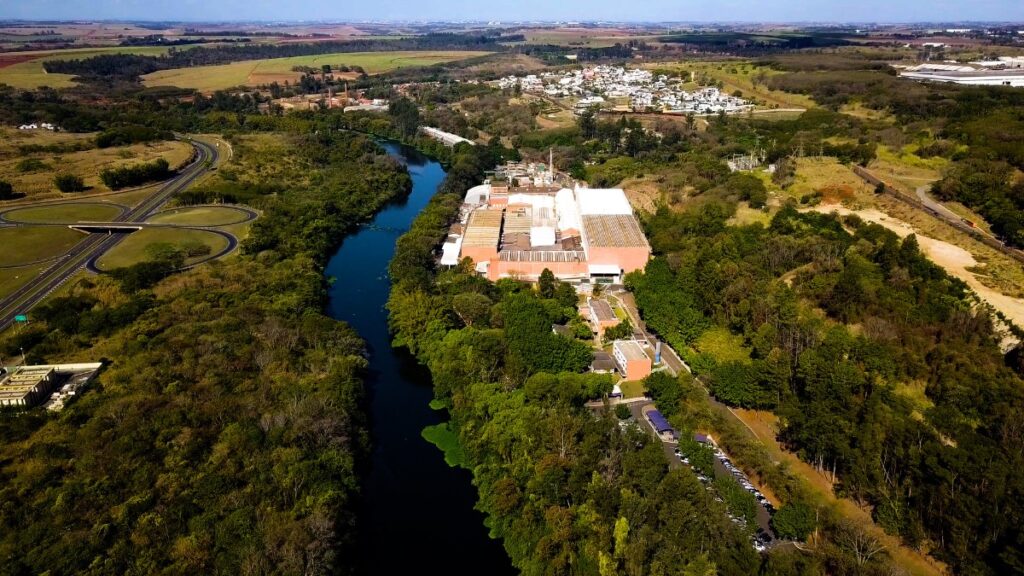
To anticipate the demands of tax reform and overcome the limitations of a legacy infrastructure, the Oji Special Papers, [Company Name], one of Brazil's leading manufacturers of thermal and carbonless paper, has just migrated its management system to the cloud after more than 30 years of operating with local infrastructure. The SAP system upgrade, conducted in partnership with [Company Name], SoftwareOne, transferred data and processes to a new digital environment with a focus on flexibility, scalability, and compliance with new regulatory requirements.
Present in Brazil since 2011, following the acquisition of the Piracicaba industrial unit, Oji Papéis' local operation began managing an extensive database and processes maintained on its own infrastructure, accumulated over decades. With the growth of operations, this model began to represent high costs and limitations in terms of scalability and technological flexibility.
According to Agostinho Monsserrocco, CEO of Oji Papéis in Brazil, the decision to migrate to the cloud was directly related to the need to adjust technology investments to the pace of the business. “The hardware-based model requires fixed investments for long usage cycles. With the cloud, investment keeps pace with the company's growth, with greater predictability,” says the executive.
The decision to modernize the management system also considered cultural aspects of the Japanese holding company, which historically values long-term relationships with strategic suppliers. Even before acquiring the Brazilian operation, SAP was already the supplier of the system used to manage processes, which influenced the choice to migrate to S/4HANA RISE as the technological upgrade platform.
This same principle guided the continuation of the partnership with SoftwareOne, which had previously served Oji Papéis and was responsible for the entire OJI S/FOUR project journey, from planning to execution.
Less data, more efficiency.
Among the main objectives of the project were reducing storage costs and decreasing the time spent on process management. Therefore, one of the most significant results was the cleanup of the company's database, which went from approximately 7 terabytes to about 200 gigabytes after migrating to the new environment.
According to Rodrigo Siqueira, IT manager at Oji Papéis, reviewing the stored data allowed for the elimination of information that was no longer operationally relevant. “There was a significant volume of data that no longer needed to be maintained. The migration enabled a more efficient organization of the database and a significant reduction in the space used,” he states.
From an operational standpoint, the system update also impacted how users interact with information. According to Fabrício Cordeiro, LATAM director of SAP technology and business at SoftwareOne, the new environment simplified processes and made data access more intuitive. "The interface now presents information in a more organized way, aligned with daily use, which contributes to productivity gains," he explains.
The new system also centralized data that was previously distributed across different areas, expanding the capacity for analysis and monitoring of indicators. "Engineering information, for example, can now be evaluated in an integrated way, creating conditions for the development of new solutions in the future," adds Cordeiro.
Technology and people at the heart of the transformation.
In total, the OJI S/FOUR project was executed over 342 days and completed in January 2026. During implementation, the main challenges were related to adapting employees to changes in processes and work routines, and not just technical aspects.
According to Monsserrocco, the introduction of a new system usually generates initial concerns among professionals. "At first, there are fears about the replacement of functions, which is common in projects of this nature. As the implementation progresses, this understanding is overcome," he comments.
According to the executive, the company's prior experience with innovation processes contributed to a more balanced transition. "Throughout the project, it became clear that the goal was not to eliminate functions, but to offer new ways of performing work, with greater efficiency and organization," he adds.
From SoftwareOne's perspective, Cordeiro emphasizes that the change required a natural adaptation period. "The transition to a more modern environment implies reviewing practices that have been established over time, which demands continuous monitoring and communication with the teams involved," he points out.
Preparing for the new tax model
The tax reform approved in 2025 established a transition period that requires companies to make technical and operational adaptations to their management systems, especially in light of the unification of taxes and the revision of fiscal processes. In this context, technological adaptation has come to be treated as a preparatory step for compliance with the new model.
The pillars of the reform will be the IBS (Tax on Goods and Services) and CBS (Contribution on Goods and Services), responsible for unifying other heavy taxes such as PIS, COFINS, ICMS, and ISS. In preparation for this change, the OJI S/FOUR project went live with the calculations for these two new taxes already implemented.
Furthermore, the software is also ready to work with split-payment, automatic tax collection in electronic transactions, with Oji only awaiting approval from the federal government to begin operations. The CEO emphasizes that the system update and database cleanup created the necessary conditions for this faster adaptation. "The migration from S/4HANA RISE and the organization of information put us in a better position to meet the anticipated changes.".
After completing the ERP migration and stabilizing the new environment, the company is only waiting for the government's signal to implement the new tax rules in its daily operations. "These were complementary steps, involving the modernization of the system, its consolidation, and subsequently, preparation for the new tax model. SoftwareOne was present throughout this entire process," concludes Monsserrocco.
About SoftwareOne
SoftwareOne is a leading global provider of software and cloud solutions that is redefining how organizations build, buy, and manage everything in the cloud. By helping customers migrate and modernize their workloads and applications – and in parallel navigate and optimize the resulting software and cloud changes – SoftwareOne unlocks the value of technology. The company’s approximately 9,300 employees are driven to deliver a portfolio of 7,500 software brands with a presence in more than 60 countries. Headquartered in Switzerland, SoftwareOne is listed on the SIX Swiss Exchange under the symbol SWON. Visit us at www.softwareone.com.
About Oji Special Papers
Oji Papéis Especiais is one of the leading manufacturers of thermal and carbonless papers in Brazil, with a history marked by innovation, sustainability, and industrial excellence. Located in Piracicaba (SP), it is part of the Japanese group Oji Holdings Corporation, which operates globally in the paper, pulp, packaging, and forestry sectors. The company combines cutting-edge technology and environmental commitment to offer solutions that are part of the daily lives of millions of people, present in commercial operations, logistics systems, ticketing, and other essential segments.
Visit at https://ojipapeis.com.br/