



 By Daniela de Sá Jacobina Pires
In a rapidly changing world, innovation is no longer a choice but a condition for survival for companies of all sizes and sectors. Innovation requires more than just good ideas: it demands structure, planning, and access to support tools capable of converting potential into results. In this context, fostering innovation plays a central role, and sectoral associations and public policies become strategic agents by connecting the productive sector with sources of financing, governance, and a culture of innovation.
The Brazilian innovation ecosystem has been advancing, although it faces significant barriers. Many companies focus on incremental innovations—process or product improvements—without achieving the maturity to develop truly disruptive solutions. Part of this challenge relates to the difficulty of coordination between companies, universities, government, and investors; another part lies in the lack of knowledge or complexity of available support mechanisms (tax incentives, repayable credit, subsidies) and the deficient internal structure for innovation management. For example, instruments such as the Lei do Bem (Law of Good) indicate that few companies take advantage of innovation incentives due to a lack of governance and understanding of the technical requirements.
Funding is the link that transforms innovative intention into execution. Incentives, credit, and subsidies reduce risk and expand companies' investment capacity. However, effective access to these resources depends on good organizational practices, such as:
- Technical-structured planning: Funding opportunities require projects with clear specifications of deliverables, technological barriers, metrics, and a timeline. A good idea is not enough;
- Internal governance of innovation: Separate innovation projects from the operational portfolio, define responsibilities, monitor results, and document lessons learned;
- Alignment with funding requirements: to ensure that the proposal aligns with criteria of impact, applicability, and scale, in addition to meeting formal requirements;
- Partnerships and innovation network: Collaboration between companies, research centers, and science and technology institutions increases credibility, accelerates execution, and improves access to resources.
When companies internalize these best practices, they make better use of support instruments and generate tangible results from their innovative potential: new products, processes, services, and business models.
Despite the progress, some areas deserve attention to broaden the impact of development in Brazil:
- Simplification and predictabilityThe processes for promoting investment need to become more agile and predictable to encourage business participation.;
- Capacity building and a culture of innovationCompanies of all sizes should incorporate innovation into their governance and develop routines, metrics, and human resources to achieve this.;
- Integration and scaleTo broaden the collaboration between companies, startups, research centers and funding agencies, and prepare projects for scaling up and internationalization.
These advances depend on continuity, dialogue, and a strategic vision that understands innovation as a state policy and a driver of sustainable growth, not as an expense or mere cost optimization.
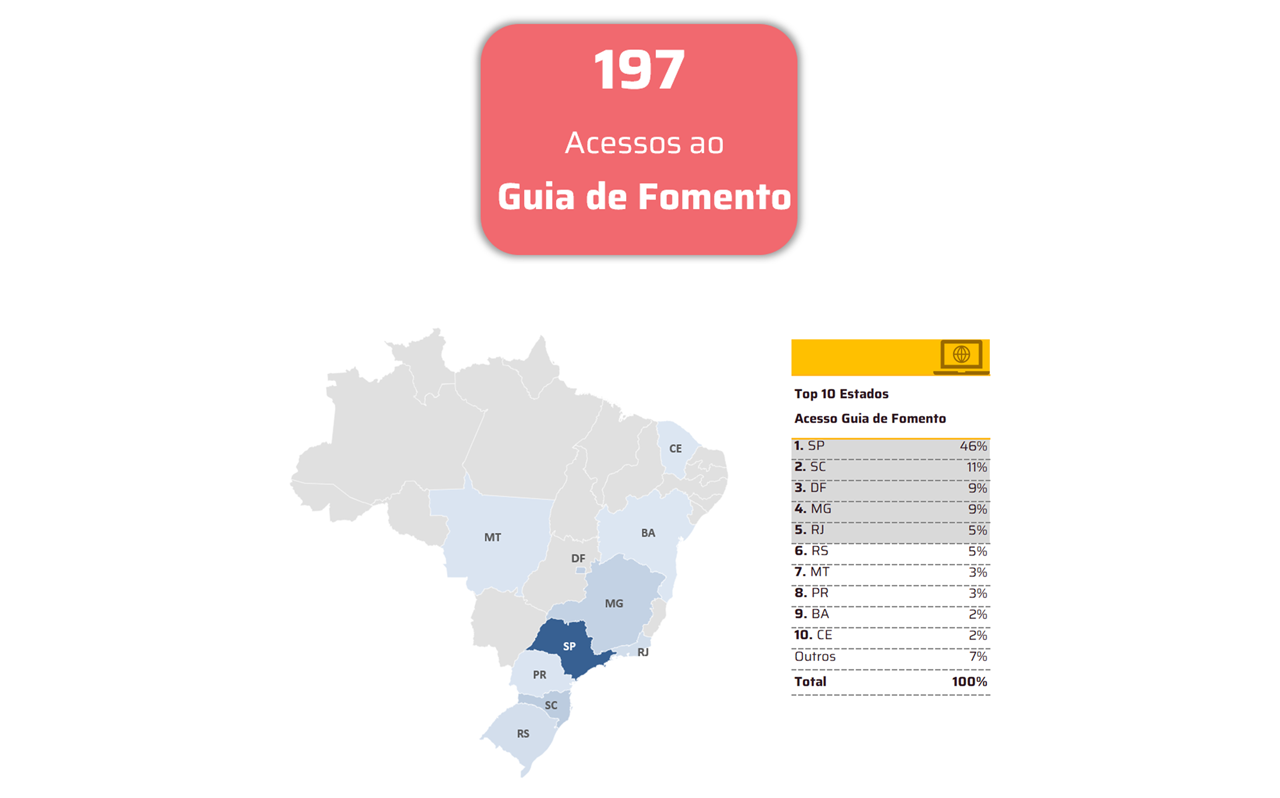
As an example of an application toolTo support the acquisition and structuring of innovation projects, ABES, in partnership with ABGI Brasil, offers the Guide to Promoting Innovation in the ICT Sector ABES/ABGI — which brings together, in an accessible way, the main lines of financing, tax incentives, and funds focused on innovation. The tool can assist companies that have already adopted the best practices described and seek to access funding instruments more effectively.
By strengthening the use of incentive instruments and the culture of innovation, the country expands its capacity to compete in a global market increasingly driven by data, sustainability, and artificial intelligence — consolidating innovation as a strategic national asset.
Daniela de Sá Jacobina Pires is the coordinator of the Think Tank at the Brazilian Association of Software Companies (ABES).
Notice: The opinion presented in this article is the responsibility of its author and not of ABES - Brazilian Association of Software Companies
Article originally published on the GUIA DO PC website: https://www.guiadopc.com.br/artigos/55841/fomentando-a-inovacao-suporte-estrategico-para-empresas.html