



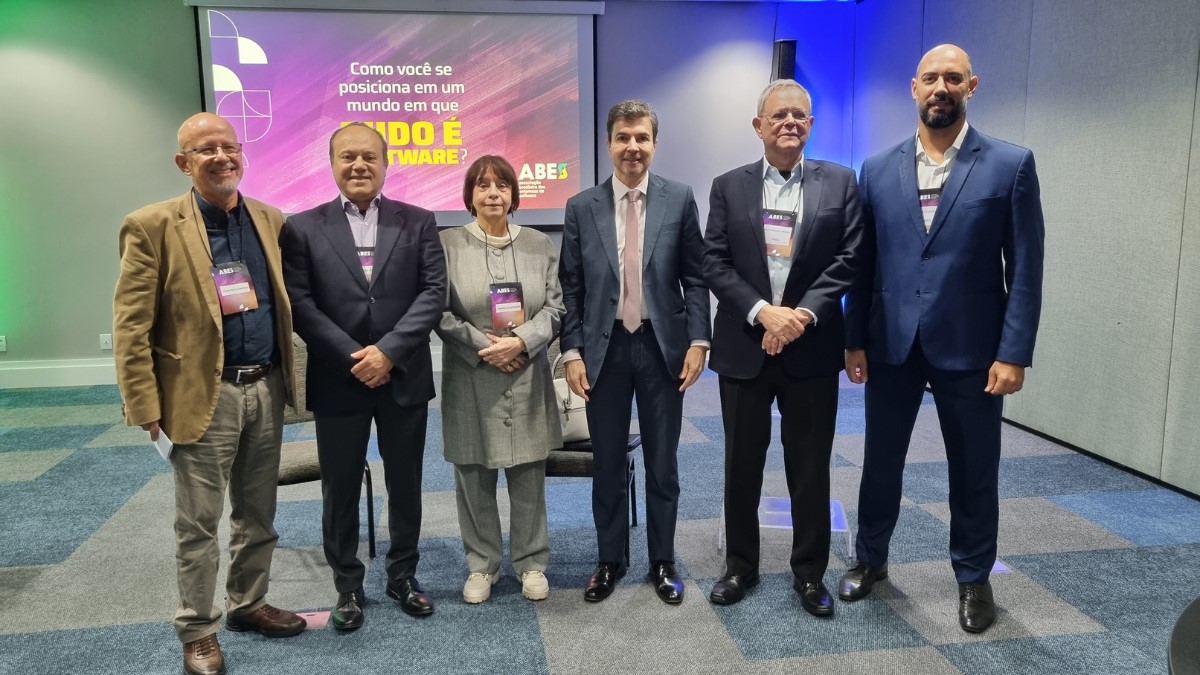
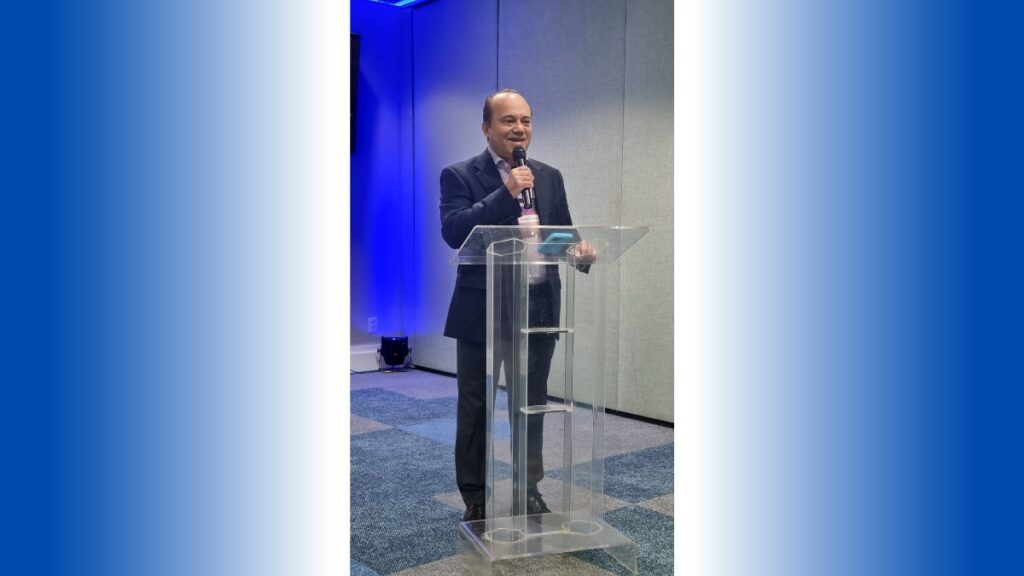
On Monday (12/05), ABES held the first edition of Café Tech in São Paulo, a space for debate and networking on topics relevant to the Information Technology sector. With the theme “The new geopolitics and the Brazilian strategy for information technology”, the event had as a special guest the director and diplomat Eugenio Vargas Garcia, from the Ministry of Foreign Affairs (MRE), to discuss the intricate relationship between the new global geopolitics and the Brazilian strategy for the IT sector. The event was opened by Ricardo Caldas, vice president of ABES, and moderated by Marcelo de Almeida, Director of Government Relations.
In his speech, Eugenio Vargas Garcia shared with those present his experience as the former head of the Science, Technology and Innovation sector at the Brazilian Consulate General in San Francisco, in the heart of Silicon Valley. He highlighted the thriving local innovation ecosystem, with the presence of large technology companies, dynamic startups, top universities such as Stanford and Berkeley, and the key role of venture capital.
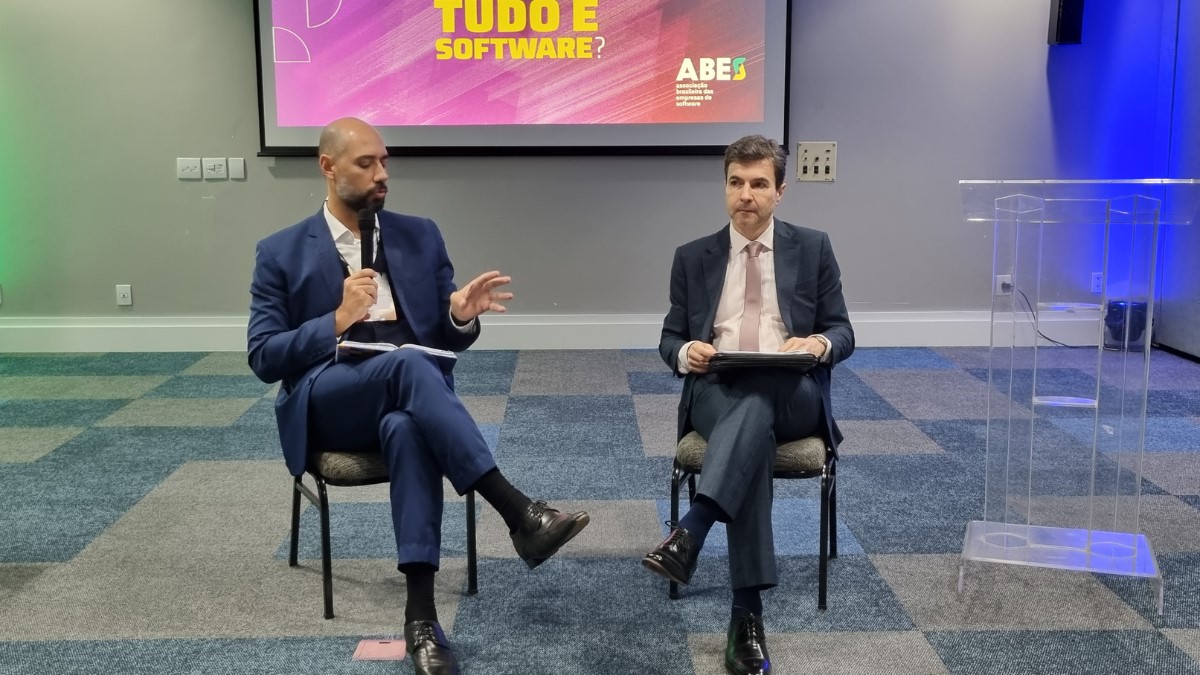
The diplomat presented the concept of “Tech Diplomacy”, which gained momentum with the appointment of Denmark’s first technology ambassador in 2017, based in San Francisco. This pioneering initiative aimed to establish a direct dialogue channel with technology companies, recognizing the fundamental role of the private sector in the digital area.
It was in this context that the Brazilian initiative to evolve from “Tech Diplomacy” to “Innovation Diplomacy” emerged. According to the director of the MRE, the objective is to place economic, social and technological development at the center of the strategy, using the wide network of Itamaraty posts abroad, including the 65 Science, Technology and Innovation Sectors (SECTEX), to promote an innovative Brazil, attract investments and internationalize Brazilian startups.
In Brasília (DF), one of the first challenges identified by Eugenio Vargas Garcia was the need for internal coordination within the Ministry of Foreign Affairs itself and, later, with other federal government agencies, such as the MDIC, the Treasury, the MGI and the MCTI, as well as regulatory agencies such as Anatel. He emphasized the importance of a unified vision on the role of digital in Brazilian foreign policy and celebrated the reactivation of the Interministerial Committee for Digital Transformation (CITDigital) as a fundamental step towards aligning objectives and working together in search of concrete results for the country.
Politicization of technology
The diplomat addressed the international situation, highlighting the “politicization of technology” as a central phenomenon. He described how technological issues have come to occupy the center of political discussions, generating geopolitical tensions.
Garcia pointed out three pressure movements on the global scene: deglobalization, with tendencies towards economic closure and protectionist policies; dedemocratization, with the emergence of illiberal tendencies and fractures between blocs of countries; and demultilateralization, with the questioning of the role of organizations such as the UN and the potential weakening of multilateralism.
In light of this complex scenario, Eugenio Vargas Garcia defended the need for Brazil to adopt a proactive stance, defending globalization, democracy and multilateralism. He mentioned initiatives such as the Brazilian Artificial Intelligence Plan (PBIA) and the future acquisition of a supercomputer as important elements of the national strategy.
Another central concept addressed was that of competitive and open digital sovereignty. Garcia emphasized that this vision does not imply market closure or complete technological self-sufficiency, but rather the strengthening of national capabilities through international cooperation and the construction of strategic partnerships.
The diplomat also highlighted the geopolitical importance of Brazil holding the presidency of the G20 in 2024 and the BRICS in 2025, as well as the future presidency of Mercosur, as opportunities to lead agendas and promote the perspective of development on the international stage. He highlighted the country's potential at the interface between decarbonization and digitalization, the so-called “twin transitions,” and the importance of sustainable performance by the private technology sector.
ABES’s Café Tech provided an enriching debate on the challenges and opportunities for Brazil in the context of the new technological geopolitics. The presence of Director Eugenio Vargas Garcia allowed representatives of the Brazilian IT sector to better understand the government’s strategy and the complex international dynamics that directly impact the development of the sector. The event reinforced the importance of collaboration between the government, the private sector, academia and civil society to drive innovation and ensure Brazil’s digital sovereignty in an increasingly connected, tense and competitive world.