



The incentive will be made possible through a public call from CNPq; institutions and researchers from all over the country can compete for credits
AWS (Amazon Web Services) and CNPq (Conselho Nacional de Desenvolvimento Científico e Tecnológico) announced on 08/03, during the AWS Summit São Paulo, the donation of $1.2 million dollars in credits for the use of the cloud to support up to 23 scientific research projects over two years. This is already the second agreement of its kind between AWS and the institution — in 2019, $400,000 was allocated to researchers across the country.
Any researcher or research center in Brazil may apply for credits, and the maximum amount allocated to each project may vary from $15 thousand to $100 thousand dollars. Proposals will be analyzed by a CNPq committee with the participation of AWS. The projects must be included in one of the priority technology research lines, ranging from the space sector through public safety, biotechnology and smart cities, to the prevention and recovery of natural and environmental disasters.
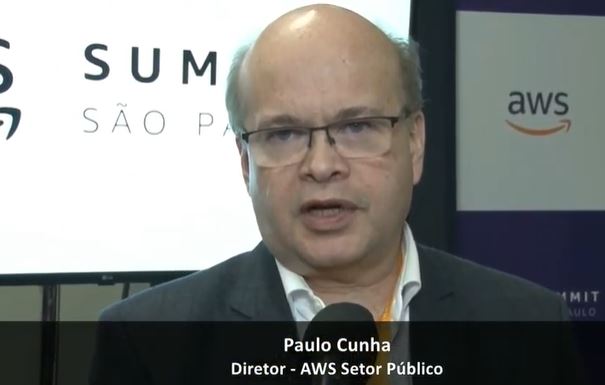 “Scientific research depends on processing and analyzing large volumes of data, collected from different sources. With cloud computing, the execution time drops dramatically, accelerating the results and, consequently, the return to the population. It was the union of researchers around the use of the cloud, for example, that made it possible to develop vaccines against Covid-19 in record time”, explains Paulo Cunha, general director for the Public Sector at AWS in Brazil.
According to the president of CNPq, Evaldo Vilela, the collaboration with AWS will provide the continuity of offering the service to use the cloud, already started in the previous call, which contributes to the agility and efficiency of the developed researches.One of the 33 projects contemplated in 2019 could have a major impact on public health. The VALERIA platform, developed by the University of Pernambuco (UPE), proposes machine learning models to help SUS teams in the differential diagnosis of dengue, zika and chikungunya, in addition to assessing the severity of tuberculosis, also collaborating in the prediction of epidemics. VALERIA works by analyzing millions of data, training and testing models, and would be unfeasible without cloud computing.
AWS and CNPq also promote DigiResearch Brasil 2022, on August 26, with the aim of presenting opportunities at AWS for researchers and programs such as the Open Data Initiative and the AWS Academy. Researchers Alba Cristina Magalhães Alves de Melo (University of Brasília), Leonardo Chaves Dutra da Rocha (Federal University of São João del Rey) and Patricia Endo (Federal University of Pernambuco), included in the 2019 public call, will share their experiences in a roundtable on what it was like to use cloud credits from the first call in your research. On the occasion, AWS and CNPq will also provide more details about the 2022 public call.
The public call for researchers to apply for credits will be published by the end of August and will be available on CNPq website