



ABES held a strategic meeting focused on qualified dialogue about the global and national macroeconomic landscape this Wednesday (April 15th) at the Wyndham Ibirapuera in São Paulo (SP). The event was opened by Andriei Gutierrez, president of ABES, who reinforced the importance of understanding the economic context for strengthening the technology sector in the country.

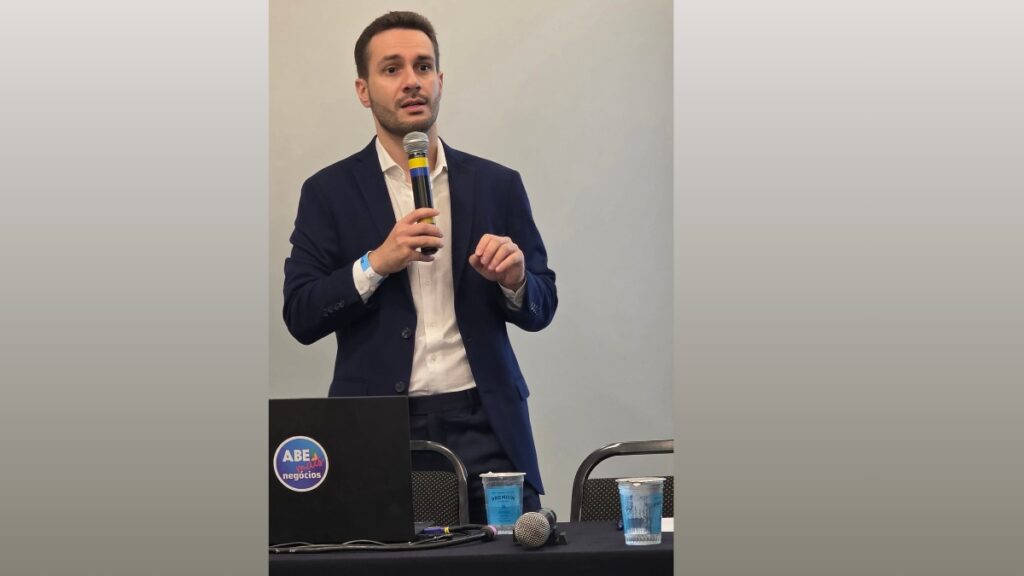
The event featured a technical exhibition of Rodolfo Margato, partner and vice president of economic research at XP Inc. In an in-depth analysis of the current moment, Margato detailed how Brazil has managed to navigate international geopolitical tensions, positioning itself resiliently in relation to other emerging markets.
Brazil in the global arena
One of the initial points of discussion was the impact of international conflicts on commodity prices. According to Margato, although war is inherently negative from a human and social perspective, Brazil has a short-term geographical and commercial competitive advantage.
“Brazil is seen as one of those 'relative winners'. First, because we are geographically distant from the war. And more importantly, since 2025, crude oil has been the main item in our export portfolio. This greatly boosts the trade balance and generates an appreciation of the terms of trade that helps keep the exchange rate below R$ 5.00,‘ said the economist.
The fiscal challenge and the future
Despite optimism regarding the trade balance and GDP growth—which has been surprisingly positive in recent years—Margato warned about the "Achilles' heel" of the Brazilian economy: the fiscal issue. The expert highlighted that, without a structural adjustment to public debt, the country will have difficulty maintaining low inflation and interest rates in the long term.

“If public debt doesn’t have a stabilization prospect in relation to GDP, it’s difficult to imagine inflation at the 31% target or the Selic rate consistently below 10% of the 3% target. That’s our biggest Achilles” heel. There’s still no major corrective measure in that area,” Margato pointed out during his speech to the members.
Expectations for the software sector
The debate also addressed the resilience of the labor market and the heating up of the capital market. According to the speaker, the current situation calls for caution and planning, as the favorable external environment may not be permanent.
“We can’t count on these favorable global winds every year. In the short term, 2026 is better than projected a year earlier, but we have a date set, starting in 2027, with an agenda of adjustments. Fiscal control doesn’t come from Congress, as parliamentarians always seek more resources for their regions. The adjustment has to come from the Executive Branch, which needs to take the lead and implement the correct measures,” he concluded.
The event represents ABES's commitment to providing strategic analyses so that its members can navigate safely through the complex Brazilian business environment and geopolitical uncertainties.