



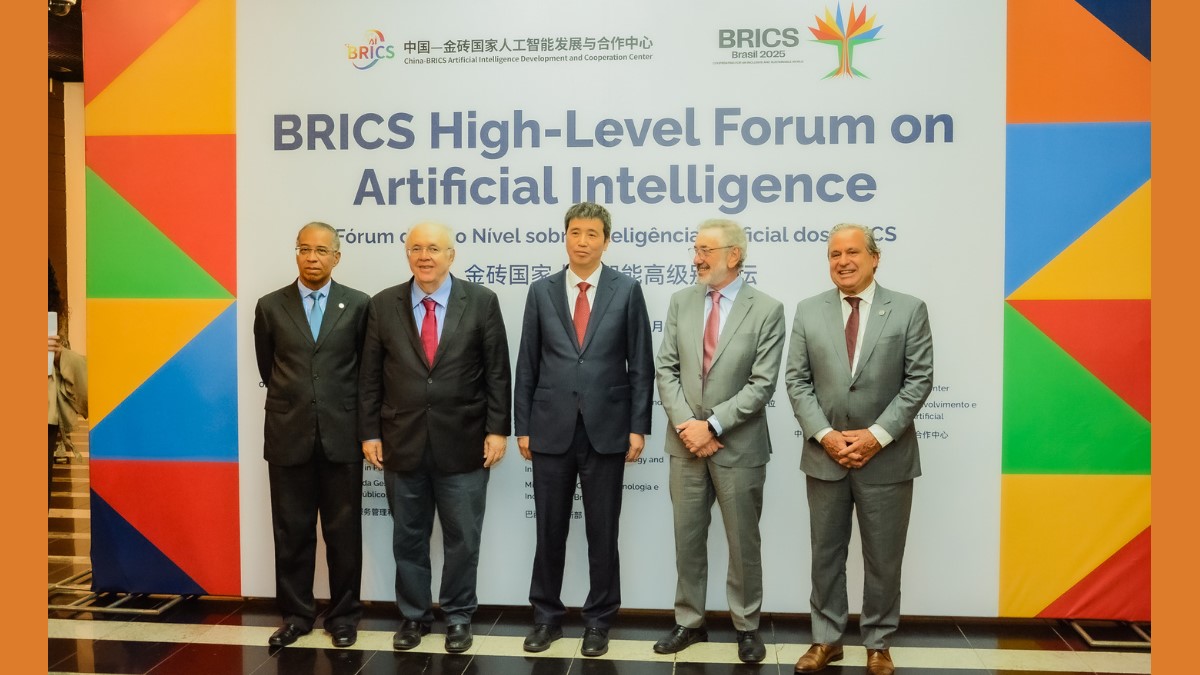
The global Artificial Intelligence (AI) scenario was the focal point of a high-level forum held in Brasilia on May 20, bringing together governments, companies, think tanks and academic institutions from BRICS countries. Under the Brazilian presidency, the event sought to chart paths towards a more equitable, inclusive and legitimate AI ecosystem, prioritizing development and justice for the Global South. ABES was present at theround table on Development and Application of AI Technology in BRICS Countries, represented by Marcelo Almeida, Director of Government Relations.
The Forum was hosted by the Brazilian Ministries of Development, Industry, Trade and Services; Entrepreneurship and Small and Medium Enterprises; Management and Innovation in Public Services; and Science, Technology and Innovation. It is also hosted by the Ministry of Industry and Information Technology of the People's Republic of China and co-organized by the China-BRICS Artificial Intelligence Cooperation and Development Center and addressed relevant topics such as the Data Economy for AI Industrial Development, International Cooperation and Capacity Building in Science, Technology and Innovation for AI, and AI in Empowering the Digital Transformation of Industry.
The voice of Brazilian SMEs
Marcelo Almeida, from ABES, brought up the perspective of Brazilian small and medium-sized enterprises (SMEs) in the context of AI. “We have over 2,000 members, and approximately 80% of them are small and medium-sized Brazilian entrepreneurs. This is a very special concern for us,” Almeida highlighted. He emphasized the need for a dedicated look at the inclusion of these companies in the artificial intelligence market, ensuring that they can compete on equal terms.
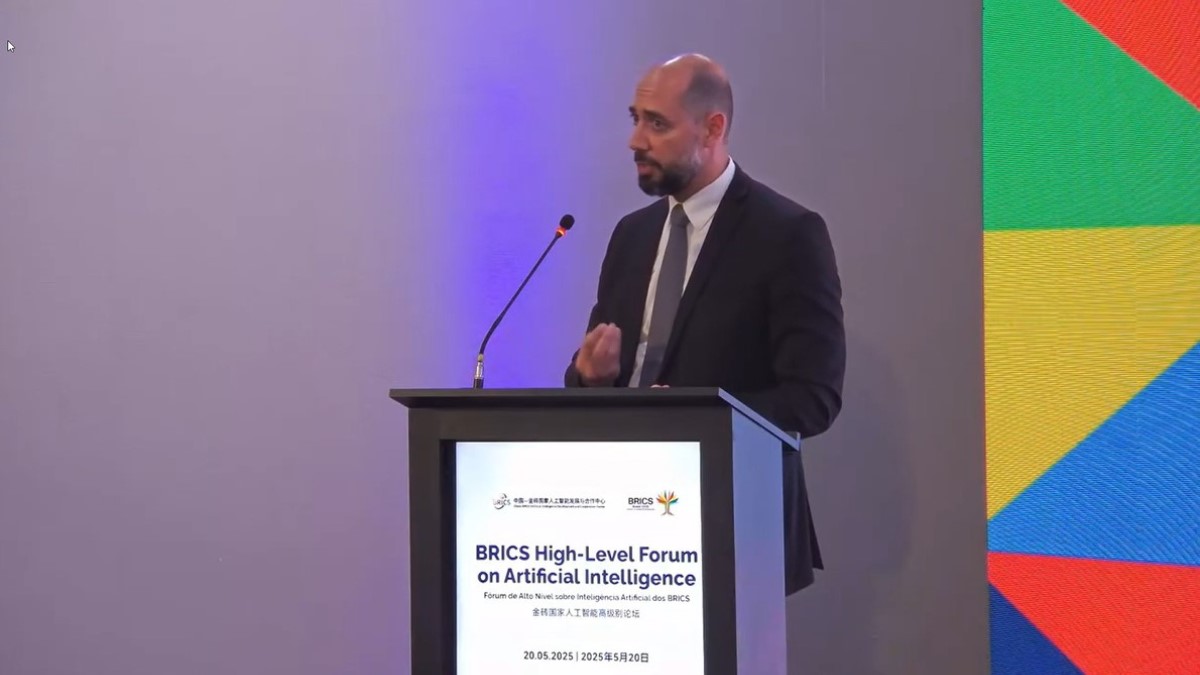
Almeida highlighted the three pillars of ABES’s work, which are directly connected to the challenges of AI. The first is the generation of qualified labor. “We need to generate labor so that we can have adequate qualifications to meet the technological needs that are coming up in all BRICS countries,” he said.
The second pillar addressed was taxation. For Almeida, the tax issue is crucial for reducing transaction costs and creating a favorable business environment, especially in Brazil. “It is very important that Brazil’s potential for technological development be taken into consideration not only by the Brazilian government, but also by the Brazilian parliament and our partners, so that we can allocate the necessary efforts here to ensure we have the desired tax security,” he pointed out, citing the current tax reform in the country.
Regulation and Risks: A Necessary Look
Finally, the Director of Government Relations at ABES emphasized the importance of regulating AI, a topic currently under debate in the Brazilian parliament. Almeida warned of the risk of inadequate regulation hindering the development of Brazilian artificial intelligence. “It is very easy for us to make connections between intelligence, the use of artificial intelligence, for example, and criminal activities. This is not good for our regulatory environment,” he said.
The main concern, according to Almeida, is the increase in transaction costs that excessively strict regulations can generate, directly impacting small and medium-sized entrepreneurs. “ABES aims to make Brazil more digital and less unequal. If we overcome inequalities, both regulatory, tax and in terms of labor generation, we can create a very favorable environment for technological development, not only in Brazil, but I believe also in all BRICS countries,” he concluded.
ABES' participation in the forum reinforces the entity's commitment to contributing to the construction of an AI future that is innovative, fair and beneficial for all, especially for the Brazilian technology ecosystem.
Watch the forum on full text here.