



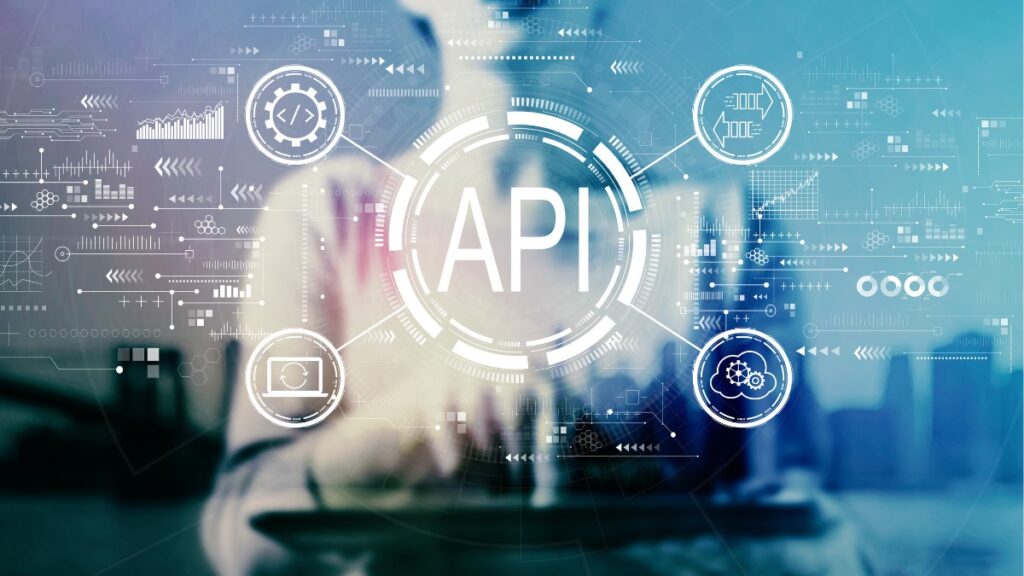
According to Gartner, by 2028 more than 751% of enterprise organizations will use two or more API gateways. Sensedia points to ways to deal with this expanding scenario, driven by hybrid models, integrations between business units, and mergers and acquisitions processes.
With the acceleration of digital transformation and the consolidation of APIs as the foundation of innovation, companies have begun to operate in increasingly distributed ecosystems., multicloud and service-oriented.
Gartner data indicates that, by 2028, more than 751% of corporate organizations will use two or more API gateways due to the adoption of hybrid models, integrations between business units, and mergers and acquisitions. However, while this brings flexibility and scalability, it also poses challenges in terms of visibility, security, and governance.
In this context, Sensedia, a global leader specializing in APIs and integration solutions, points out the main benefits of a multigateway strategy for businesses. These include greater control over rapidly expanding environments, agile integration and compliance in regulated environments, and increased operational efficiency.
Control over a rapidly expanding environment
Adopting a multigateway architecture emerges as a response to ensure consistency and control over a rapidly expanding environment.
While this diversity brings gains in autonomy and speed, it can also lead to the fragmentation of digital assets, duplication of APIs, increased operational complexity, and security and compliance risks if it is not accompanied by a solid layer of unified governance.
According to Kleber Bacili, CEO of Sensedia, the advancement of multigateways reflects a structural shift in how companies approach systems integration and API management.
“Multigateway is a natural consequence of the evolution of distributed environments. Companies are dealing with different clouds, providers, tools, and business contexts. Without centralized governance, this diversity quickly becomes an obstacle to innovation and scalability,” explains Bacili.
According to the executive, a multi-gateway governance platform allows for the automatic synchronization of APIs between different gateways, reducing rework and maintaining consistent security and compliance policies across the organization. This approach also increases independence and flexibility for development while enhancing API security and governance, regardless of where they are published, without compromising team agility and performance, and improving the visibility and observability of APIs and integrations.
Agile integration and compliance in regulated environments.
Operational gains go beyond technical efficiency. In mergers and acquisitions, for example, multigateway enables the rapid integration of different API inventories, without the need to redo policies or recreate configurations.
In regulated environments, such as Open Finance and Open Insurance, it facilitates the automation of compliance workflows, ensures continuous auditing of changes to critical APIs, and strengthens the security of the ecosystem.
“Unified governance is what makes a multigateway environment intelligent. With a consolidated view of all APIs and their dependencies, technology teams gain control and business areas regain speed. It's a paradigm shift: the multigateway becomes a strategic layer, not just an operational one,” adds Bacili.
Increased operational efficiency
The model also has a direct impact on the productivity of developers and DevOps teams, who can now operate with enhanced observability, simplified API lifecycle management, and easier component reuse. This accelerates the onboarding of new partners, reduces the time-to-market for digital products, and strengthens competitive agility—a critical factor in a scenario where speed of response has become a market differentiator.
 Recent studies by Forrester reinforce this view: companies with robust API governance mechanisms achieve 35% more operational efficiency and reduce the time to integrate new services by up to 40%. "These numbers show that governance, when applied strategically, is an engine of innovation and not a barrier," emphasizes Bacili.
Sensedia has been driving this debate and supporting large companies in modernizing legacy architectures and migrating to new models. multicloud and multigateway across various sectors, helping organizations balance agility and security in their integration ecosystems.
“"Architectures are becoming increasingly hybrid,", multicloud, "Multivendor integration can, if special care isn't taken with APIs, exponentially increase the complexity of integration governance. Companies that adopt intelligent and unified governance will be ready to scale innovation sustainably. This isn't a technical option, but a long-term strategic decision," concludes Bacili.
About Sensedia
Sensedia is a Brazilian multinational provider of API management platforms, integration and microservices solutions, and professional services. The company drives the digital transformation of large companies by enabling more agile, modern and scalable architectures, thus enabling its customers to offer digital products and experiences to their entire ecosystem. Learn more at sensedia.com.br.