



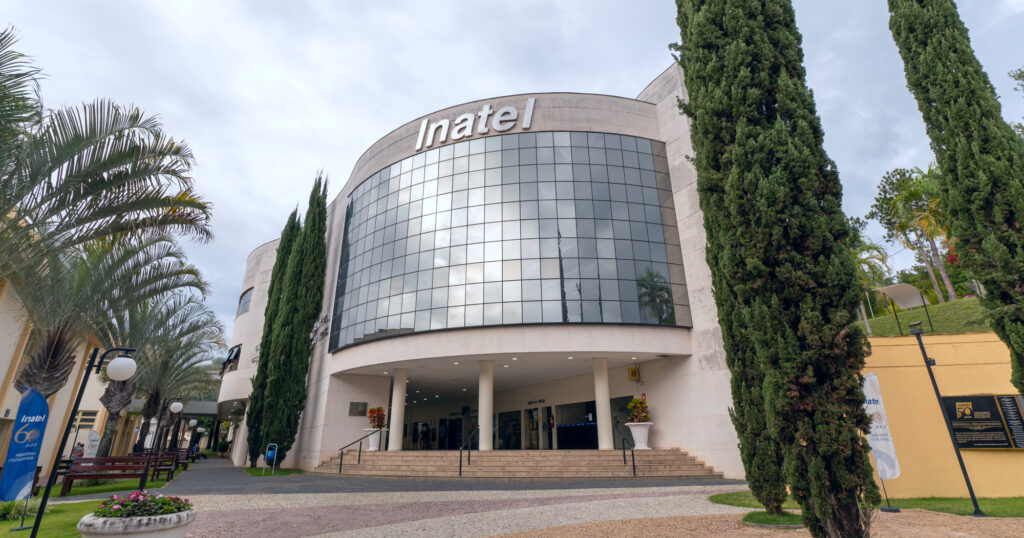
Next March 21st marks World Startup Day. Amidst the debate about the maturity of entrepreneurship in Brazil, the spotlight falls on the ecosystem of Santa Rita do Sapucaí, in southern Minas Gerais. Known as the Electronics Valley, the city of 40,000 inhabitants is home to one of the country's main technological hubs, driven by Inatel Startups, the business incubator of the National Institute of Telecommunications – Inatel.
The institution's impact on regional development is measurable: 651 out of the city's 170 technology companies were founded by Inatel students or alumni. This ecosystem is responsible for generating approximately R$1 billion annually and creating over 2,000 direct jobs.
Focus on Deep Tech and Critical Infrastructure
Inatel Startups, rooted in the pioneering telecommunications and engineering institute, distinguishes itself through its focus on Deep Tech. These are advanced technology-based companies that develop robust hardware and software solutions in strategic areas for digital and industrial sovereignty.
The solutions developed cover strategic areas such as connectivity (5G and 6G research), the Internet of Things (IoT) applied to agribusiness and smart cities, as well as critical infrastructure such as satellites, networks and cybersecurity, in addition to artificial intelligence applications in automation and embedded systems.
Inatel's entrepreneurial journey dates back to the 1980s, having been formally established in 1992. Throughout its history, the Incubator has graduated 85 companies. The model's distinguishing feature lies in its survival rate: more than 50 of these startups remain fully operational, serving complex markets and critical infrastructure sectors.
About Inatel
The National Institute of Telecommunications – Inatel, founded in 1965, is a center of excellence in teaching, research, and technology development. Located in Santa Rita do Sapucaí, in southern Minas Gerais, it was the first higher education institution for Telecommunications Engineering in Brazil and currently offers seven undergraduate courses, as well as postgraduate specialization courses, distance learning courses, and Master's and Doctoral degrees in Telecommunications.
In addition to training professionals, the Institute facilitates the transfer of technology to the market and maintains strategic partnerships with national and multinational technology companies, as well as bodies such as the Ministries of Education and Science, Technology and Innovation. Since 2016, it has been the Embrapii unit responsible for supporting development and innovation in Brazil, and in 2023 it was announced as the Embrapii Center of Competence in 5G and 6G Networks. For more information, visit [website address - not provided in the text]. site.