



Quality, security and digital innovation are among the main advances in the sector
Huawei Digital Power, Huawei's business unit focused on solutions for the generation and distribution of photovoltaic energy, released the 10 trends in solar technology in 2024. The announcement was made during the launch of a white paper (article), with the theme “Continuous innovation, high-quality development and acceleration of photovoltaic energy as the main energy source”.
Highlights include the increasing use of artificial intelligence models and the global push towards carbon neutrality associated with energy generation and storage. According to the International Renewable Energy Agency (IRENA), installed photovoltaic capacity is expected to reach 5,200 GW (Gigawatt) by 2030 and 14,000 GW by 2050, with renewables accounting for more than 90% of capacity and solar playing a dominant role .
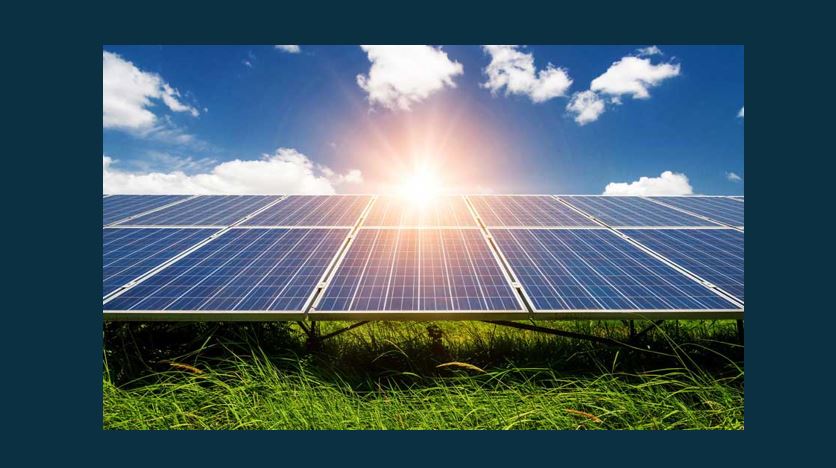
In Brazil, the sector is growing rapidly. Data from Brazilian Photovoltaic Solar Energy Association (ABSOLAR) show that this energy matrix is already the second largest in the country with 38.4 GW in operation, responsible for more than R$189.3 billion in investments, more than 1.1 million jobs and 45 million tons of CO2 avoided.
“As renewable energy, especially photovoltaic energy, advances in the market, the quality and security of network infrastructure also advances”, explains Roberto Valer, technical director at Huawei Digital Power. “The objective of the article is to list the fundamental technologies that guarantee confidence and profitability in the sector”, he explains. Are they:
Trend 1: More stable generation and storage
The photovoltaic system and the Energy Storage System (ESS) are rapidly evolving from a supplementary to a stable source and will soon become a primary source. This is due to the fact that the more adoption of photovoltaics increases, the more prices for generation and storage decrease, making the system more affordable and more scalable.
Trend 2: Management of tens of millions of power plants
Using cloud native, tens of millions of PV and ESS devices can be connected to digital systems. This represents time reduction and agile, easy and intelligent management. The cloud, combined with AI, allows the expansion of big data analysis capacity. This creates an intelligent energy network with tens of millions of interconnected and collaborative nodes, which support safe and efficient operation.
Trend 3: Intelligence across the entire lifecycle of power plants
Digital and smart technologies play a key role across the entire life cycle of power plants, including planning, construction, maintenance and operation. Intelligence increases quality, efficiency and revenue, as well as adding reliability and stability.
Trend 4: Grid formation in any scenario
Launched last year, the technology Grid Forming It is already successfully adopted in various commercial scenarios in China. In the long term, expanding its adoption will improve the network as a whole.
Trend 5: Security in four dimensions
Demands for security in solar energy generation and storage systems have evolved from protection focused on devices to holistic work in four dimensions – suppliers, devices, networks and systems – that guarantees operations throughout the entire process.
Trend 6: Cell-to-grid storage security
The large-scale application of Battery Energy Storage System (BESS) and updating security standards require the storage system to ensure security from the cell level to the network level. Such a project needs to integrate power electronics, digital, thermal, electrochemical, and AI technologies to implement fine-grained monitoring and management at the cell, battery, battery rack, ESS, and grid levels.
Trend 7: MLPE and CLPE
The need for refined management encourages large-scale commercialization of power electronics at the module level (Module-Level Power Electronics – MLPE, in English) and further influences the energy storage industry, leading to cell-level power electronics (CLPE). MLPE and CLPE have become the new requirements for distributed photovoltaic plants.
Trend 8: High Voltage and Reliability
Technological innovations have increased direct current (DC) and alternating current (AC) voltages, reducing the levelized cost of energy (LCOE). It is estimated that photovoltaic plants will evolve to even higher voltages in the future, exceeding 1,500 V (volts) on the DC side and 1,000 V on the AC side.
Trend 9: High frequency and high energy density
The energy density of inverters will continue to improve through the application of third-generation semiconductors and digital technology.
Trend 10: High quality
Promoting the large-scale adoption of photovoltaic energy requires the adoption of international and national standards and regulations that increasingly guarantee safety and quality. This is a movement by companies, governments and national and international standardization and regulatory bodies.
“Innovation and quality are crucial for the photovoltaic industry. Huawei Digital Power will continue to invest in research and development, focus on innovative integration of watt, bit, heat and battery (4T) technologies, and align with customer demands. The company hopes to contribute with products and solutions that accelerate the development of the industry and guarantee a renewable and low-carbon future”, adds Roberto Valer.