



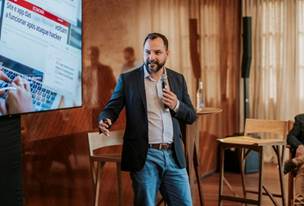
 *By Mario Gama
The rise in geopolitical tensions and the exponential advance of Artificial Intelligence (AI) These events are creating unprecedented challenges for the cybersecurity sector. In recent months, experts have warned of a possible intensification of digital attacks conducted by groups linked to nation-states. Amid the new conflict in the Middle East, John Hultquist, chief analyst of Google's Threat Intelligence Group, warned Organizations around the world must prepare for a new wave of cyberattacks conducted by hackers linked to Iran. At the same time, AI is being used to sophisticate and scale these attacks, creating a more complex and dynamic risk environment.
Anticipating this scenario, in November 2025, Google released the report “Cybersecurity Forecast 2026”The document, which presented trends in the sector, highlighted the simultaneous growth of two critical vectors: the actions of state-sponsored groups and the increasing use of AI by malicious actors. It details how these technologies are being exploited by criminals and identifies countries with a history of direct or indirect support for strategic cyber operations, as well as potential target sectors.
In early 2026, Google again mentioned the intensification of these attacks in a another article, in which he mentions Iran, while the Microsoft It began to emphasize the need for the secure adoption of AI solutions for the protection of sensitive data.
Although these trends were already anticipated, the escalation of global tensions came as an unfortunate surprise, highlighting the urgent need to adapt to new threats. While large technology companies have already studied the risk factors, it is now necessary to understand and be aware of the conclusions reached in order to maintain a safe market environment.
Cybersecurity and AI
The popularization of artificial intelligence tools has also reached the world of cybercrime. Today, this technology is already used in different attack fronts, from social engineering campaigns to the automated creation of malicious code. There are even recent records of scams that use... deepfakes to impersonate executives and authorize multimillion-dollar financial transfers. The combination of generative AI, leaked data, and social engineering allows for the creation of increasingly convincing frauds, drastically reducing the barriers to successful attacks.
Furthermore, specific cybersecurity threats are emerging, such as so-called prompt injections, a type of... attack in which criminals attempt to manipulate artificial intelligence models through malicious prompts, inducing them to ignore security guidelines and reveal sensitive information.
These attacks become even more dangerous when the company lacks a structured ecosystem for the use of this technology and employees do not use a common security protocol to handle these tools. The research Global Cybersecurity Outlook 2026, A study by the World Economic Forum confirms this scenario and points out that small businesses are twice as likely to suffer cyberattacks as large organizations, mainly due to limited resources for investing in digital protection and risk management.
Cybersecurity as an extension of international disputes.
Cybersecurity has also become a strategic dimension of disputes between countries. According to analyses by Google, Governments of countries such as China, Russia, Iran, and North Korea maintain ties with hacker groups responsible for digital operations aligned with national interests. These actions, in most cases, are espionage-related, aiming to obtain strategic information. In other cases, they may seek to damage critical infrastructure or generate financial resources to fund operations.
Regarding Iran, the warning applies mainly to aerospace or defense technology companies that do business with the United States government or allied countries. Google has already identified, for example, the posting of fake job openings in these sectors to attract employees working at other companies, leading them to click on links that would install malware on their computers, allowing for the spying on emails and other information exchanges.
Strengthening cybersecurity is everyone's responsibility.
Despite the increase in threats, the good news is that these factors are already known to large technology companies, which have been developing effective and up-to-date cybersecurity solutions. The real risk, however, is delaying and failing to prepare for an emergency before it happens.
In this context, digital security needs to be viewed as a collective effort, considering that a vulnerability exploited in a shared infrastructure, such as a cloud environment, can affect several organizations that use the same technological ecosystem.
Given this, it is possible to observe that cybersecurity has already reached a high level of maturity, being, in many cases, more than sufficient to face the threats. What is still lacking is to increase awareness of its importance and strengthen the culture of prevention within companies, before major attacks occur.
Mario Gama is the director of cybersecurity for Latin America and the Caribbean at [company name]. SoftwareOne, a leading global provider of end-to-end solutions for software and cloud technology.
Notice: The opinion presented in this article is the responsibility of its author and not of ABES - Brazilian Association of Software Companies