



Why Brazil must overcome "digital islands" to build cities that think and act in real time.
 * By Leonardo Müller and Daniel Luis Notari
The concept of a Smart City is mistakenly reduced to a technological showcase: the installation of surveillance cameras, connected traffic lights, or IoT sensors. However, equipping a city with cutting-edge hardware does not automatically make it intelligent. True urban intelligence lies in the intangible, that is, in the ability to integrate and process data to support real-time decisions.
A city only achieves this status when its systems communicate with each other, overcoming the logic of isolated departments. The goal is not just to collect data, but to allow the flow of information from one area to automatically optimize the actions of another, such as security or traffic. Without this interoperability, investment in technology results only in aesthetic modernization, without real gains in efficiency for public management.
The global benchmark for integration lies in the Chinese model, embodied by Hangzhou's "City Brain." There, the city operates as a single organism, supported by a centralized data architecture that ignores departmental boundaries. The system transcends passive monitoring and acts autonomously: it adjusts traffic lights in real time to create "green corridors" for ambulances, drastically reducing response time without the need for human intervention.
This operational fluidity is made possible by a unified data governance that breaks down bureaucratic barriers between departments. Unlike the West, where privacy and institutional autonomy fragment data, the Chinese model forces interoperability. The result is a management system where traffic, security, and emergency services share the same "brain," proving that technology only reaches its peak when the barrier between public bodies ceases to exist.
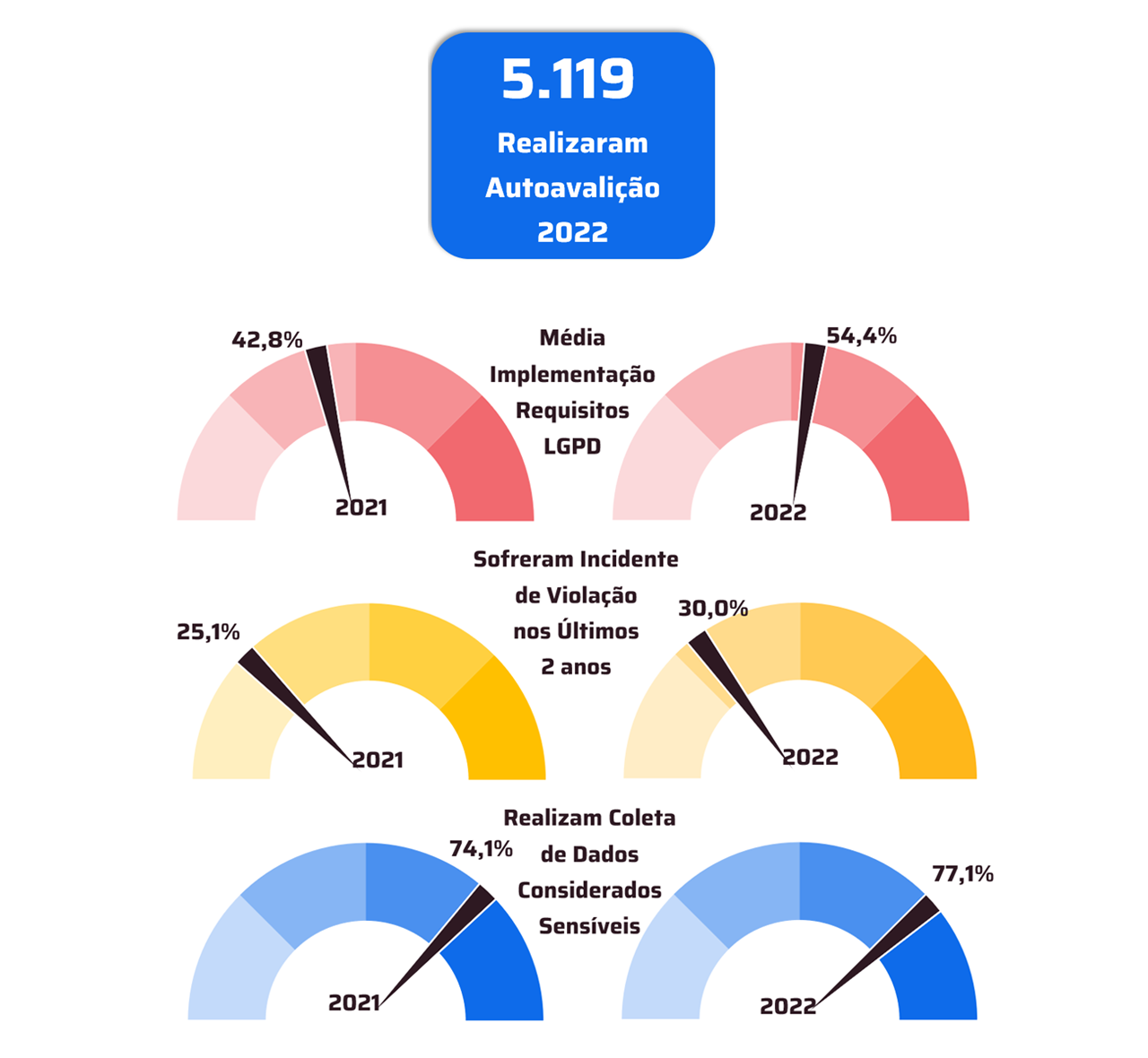
Beyond the technical barriers, there is a fundamental ethical distinction. While the Chinese model is based on unrestricted surveillance and social control, Brazil has an insurmountable safeguard: the General Data Protection Law (LGPD). National urban “intelligence” cannot arise from individual monitoring, but rather from the rigorous anonymization of data. Unlike Asia, our challenge is twofold: we need algorithmic efficiency without sacrificing privacy, ensuring that the smart city serves the citizen without spying on them, building digital trust instead of fear.
In contrast to Asian integration, the Brazilian scenario is marked by the phenomenon of "digital islands." Our municipalities are modernizing in a fragmented way: departments contract proprietary software without open APIs or the capacity for dialogue. The result is an archipelago of isolated systems, where Health is unaware of Social Assistance data and Security ignores Mobility.
This disconnect stems from the lack of a strategic Technology Master Plan. Without a unified vision, management merely digitizes the old bureaucracy instead of transforming it. The problem is exacerbated at the base: with data dependent on manual entry or precarious legacy systems, we fall into the "garbage in, garbage out" trap. Without structured and integrable data, the application of artificial intelligence becomes unfeasible, leaving only a veneer of modernity over inefficient processes.
The solution for Brazil does not lie in copying the centralized Chinese model, but in adopting a "third way": Government as a Platform (GaaP). In this paradigm, the municipality stops trying to be the sole provider of digital solutions and becomes the orchestrator of the ecosystem. Public managers should abandon the purchase of closed software and focus on contracting interoperable data infrastructure and creating public APIs.
By opening data with the necessary security, the government democratizes innovation. This allows startups, universities, and civil society to develop end-user applications on a trusted foundation, decentralizing intelligence. The national challenge is not to build an all-seeing "giant brain," but to weave a distributed neural network. We need fewer proprietary walls and more bridges of interoperability to finally transform our digital islands into a connected archipelago, delivering services worthy of the 21st century.
Notice: The opinion expressed in this article is the responsibility of its authors and not of ABES – Brazilian Association of Software Companies
Article originally published on the IT Forum website: https://itforum.com.br/colunas/alem-da-vitrine-tecnologica-a-inteligencia-urbana-como-integracao-de-dados/