



Strengthening the Brazilian digital economy and consolidating robust governance for the sector were the central themes of the workshop on... National Data Economy Policy, The event, held on April 1, 2026, by the Brazilian Agency for Industrial Development (ABDI), and linked to the Ministry of Development, Industry, Trade and Services (MDIC), served as a platform to disseminate the results of the public consultation that will guide the country's future strategies. Among the invited experts were..., Marcelo Almeida, director of government relations at ABES (Brazilian Association of Software Companies), stood out by presenting a vision that combines economic pragmatism and social justice.
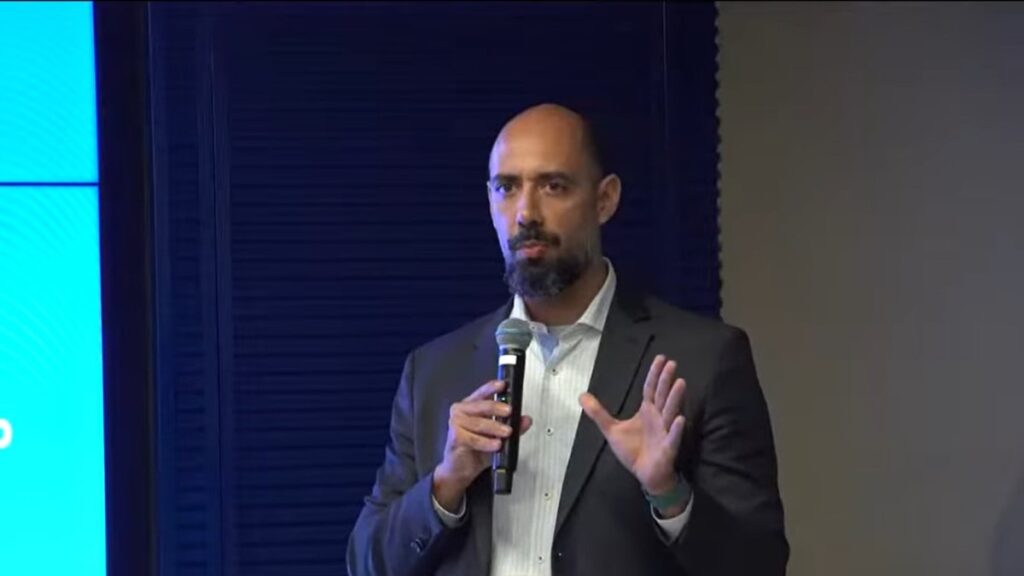
In his speech, Almeida presented striking data that reinforces the sector's relevance: "The software market in Brazil has grown 14% "In the last year. That's no small feat; it's a significant achievement that demonstrates our resilience and potential," he stated. He noted that Brazil is the fourth country in the world in terms of mobile internet access and leads technological development in Latin America, factors that, according to him, need to be leveraged to position the country as a leading player globally.
The strategic tripod: sovereignty, regulation, and infrastructure.
The director of ABES structured his analysis around three fundamental pillars for digital sovereignty:
- Competitive sovereignty: Almeida introduced an innovative concept of sovereignty that avoids isolationism. Using the example of technology transfer in the Gripen fighter jets, he argued that Brazil should cooperate with global leaders to internalize knowledge. "Sovereignty is not about dominating every element of the chain on national soil, but about having the expertise to make a difference where we are good," he explained.
- Attractive regulation: Criticizing the "regulatory complexity" that generates legal uncertainty, the director argued that Brazilian rules need to stop being merely repressive and become an invitation to development, finding a balance that protects citizens without stifling innovation.
Public Infrastructure and Data: The executive emphasized the need for a centralized and empowered national policy, pointing to companies like Serpro and Dataprev as key players. According to Almeida, the integration of data from different programs, such as Bolsa Família, can revolutionize the efficiency of public policies, allowing for much more precise resource allocations based on geographic and social realities. “Building public policy is very complex. But the guidelines are in place. Perhaps it's a matter of connecting the dots so that we can make the allocations correctly and generate the necessary incentives so that what we plan truly comes to fruition in a short period of time,” he concluded.
A purpose beyond technology
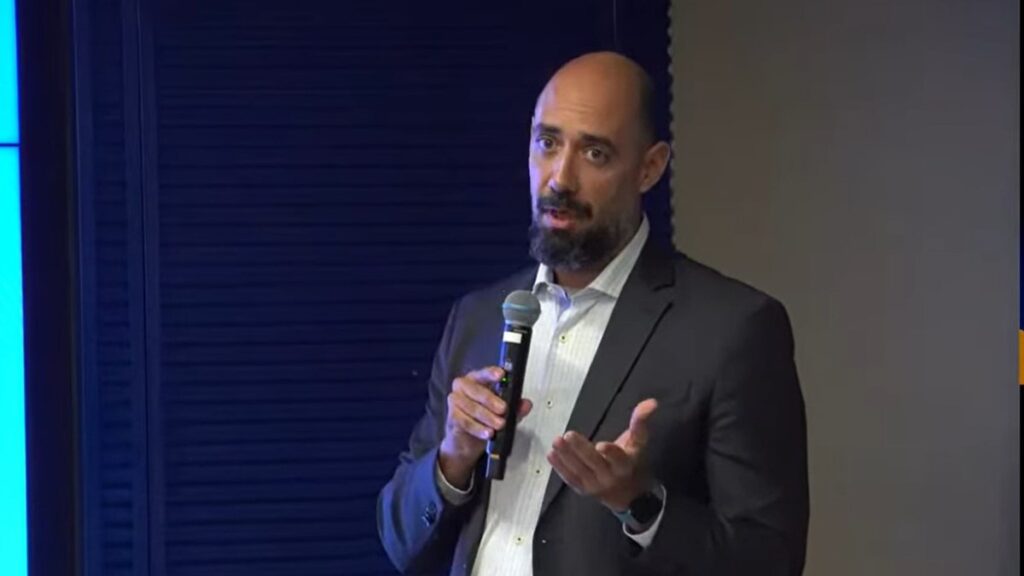
At the close of his participation in the event broadcast on YouTube, Marcelo Almeida reinforced ABES's commitment, which has more than 2,000 members. He emphasized that the ultimate goal of technology should be human: "Our purpose is to make Brazil more digital and less unequal." For the organization, the National Data Economy Policy is the relevant tool that will contribute to transforming Brazil's technological potential into a reality that reduces the country's historical problems, promoting digital inclusion that effectively generates wealth distribution and social well-being.
To watch Marcelo's appearance, go to: https://youtu.be/VRMNKu3GnwE
To watch the workshop in its entirety, go to: https://www.youtube.com/watch?v=9OrYeR3fQy0