




Who are the professionals working in information technology (IT) companies or departments in Rio de Janeiro? What is the profile of these professionals? How much do they earn working in this market? What are the most valued characteristics in the sector? These and other answers were revealed today (5) with the release of HR IT Survey Rio 2025. The results indicate that the sector has a stable organizational base, planned improvements, and consistent investments. The survey also reveals that there has been an improvement in people governance, with positive policies and indicators for leadership, training, and diversity and inclusion (D&I) practices.
“"This evidence shows a virtuous cycle in the IT ecosystem of Rio de Janeiro, which may be the result of a scenario recently revealed in..." ICT Study of Rio de Janeiro, "This revealed that the sector grew by approximately 101% post-pandemic with an investment of over R$65 million by companies in the area," analyzes Alberto Blois, president of TI Rio – an entity that represents information and communication technology companies in the state of Rio de Janeiro – responsible for both surveys.
Sylvia Meireles, director of TI Rio and coordinator of the TI Rio 2025 HR Survey, highlights that the survey confirms a new stage of maturity in the Rio de Janeiro technology ecosystem, marked by the integration between tech providers and tech-driven organizations. “The results show that the sector is more connected and decentralized, with emerging hubs in cities like Teresópolis and Três Rios, which expand reach and strengthen the interior of Rio de Janeiro as an innovation axis. This decentralization not only reduces operational costs but also favors the retention of local talent. Another key point is the consolidation of the hybrid model, which is being adopted in a structured way, with rituals and performance metrics, resulting in leaner, more productive teams with greater predictability in results,” considers Sylvia.
Commissioned by the TI Rio board and conducted by Fábrica de Cursos with support from PUC Rio, the survey aims to guide human resources policies for the area. This year, 71.11% of respondents are IT companies and 28.91% are organizations from other sectors with an internal technology area. “Despite the online, anonymous, and voluntary data collection, we had gamified participation, with prizes for the companies with the highest engagement. In addition, we used playNwhere's AI, DASH (playNwhere's generative AI), which monitored participation, answering questions in real time. Another new feature was the inclusion of LLL (lifelong learning) with educational materials on the research themes (D&I and legislation, LGPD and best practices, T&D with diagnostic tools, research with indicators, and others),” explains Sylvia.
Discover some of the research results.
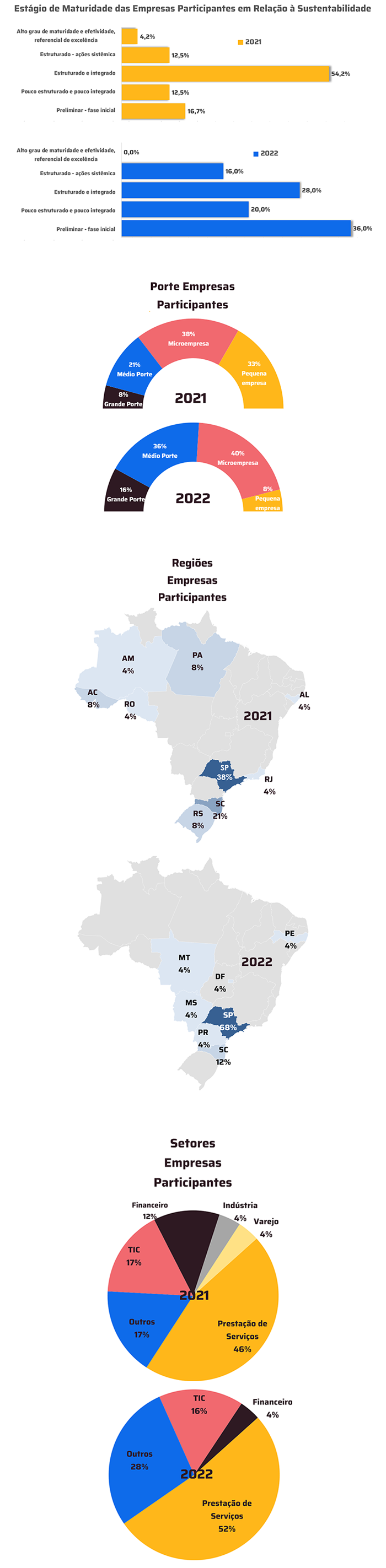
Maturity and size – The sample is mature: 71.0% are 15 years old or older (16–30: 39.5%; 31+: 31.6%), suggesting consolidated governance and the capacity to execute complex projects. In terms of size, lean structures prevail — Micro (15.8%) and EPP (47.4%) total 63.2% — followed by Medium (28.9%) and Large (5.3%). This mix combines agile decision-making and scalability through ecosystems (partnerships, consortia, and open innovation).
Structures and teams – 68,4% operate with up to 50 employees. In IT teams, 52,6% maintain between 1 and 10 professionals. The choice of compact teams favors speed of delivery, customization, and orchestration by specialists (outsourcing and on-demand talent).
Work formats – The hybrid system is consolidating as the collaboration standard. Over a 12-month period, 44.71% of companies maintained their IT staff, while 34.21% grew (with emphasis on up to 201%); 7.91% expanded beyond 201% — a sign of selective growth and headcount discipline. Experimental and large-scale evidence indicates that 1 to 2 days of office work per week preserves productivity and promotions and reduces turnover.
Salary range by position – The workforce in companies is mostly composed of junior professionals: 42.1% (with salaries up to R$2,500) and 36.8% (in the range of R$2,600 to R$5,000). The salary range for mid-level professionals varies from R$2,600 to R$7,500. Senior professionals, for the most part, receive between R$5,100 and R$15,000.
Investments in Training and Development (L&D) – The criteria for recruiting, selecting, and retaining talent prioritize competitive compensation and benefits (54.1%), soft skills (51.4%), and cultural fit/work model (46.2%). Experience and specific skills appear in equivalent proportions (29.7%), preserving technical requirements without restricting hiring.
Leadership development and employee experience - These remain at the top of the HR agenda, with an emphasis on technology for efficiency. Collaborative workshops (54.1%) lead as the most common practices for corporate education. Structured digital formats also stand out, totaling 37.8% (21.6% microlearning + 16.2% customized learning paths).
Qualification priorities – AI (48.6%), Information Security (37.8%), Project Management (37.8%), new languages (29.7%), as well as soft skills (27.0%), communication (24.3%) and leadership (21.6%) are listed in the research, which is consistent with international trends in AI & Big Data, cybersecurity and project talent gap.
Leadership (essential skills) – The leadership profile is strategic and human: business acumen (84.9%), empathy in people management (78.8%), and adaptability (72.7%).
ESG and Diversity – There is an observed increase in female representation in intermediate proportions (25–50%) and growth in their presence in management—still in small teams, but already structuring for accelerating leadership. Where female presence was residual, today there are 1 to 2 women for every 4 professionals, a basis for mentoring, sponsoring, and policies with goals and indicators. Although mentoring for women is among the most effective practices, the main barriers are the absence of structured policies (57.1%) and biases in recruitment (17.1%)—reinforcing the need for D&I governance.
To see the HR IT Survey Rio 2025, Visit ti.rio.