



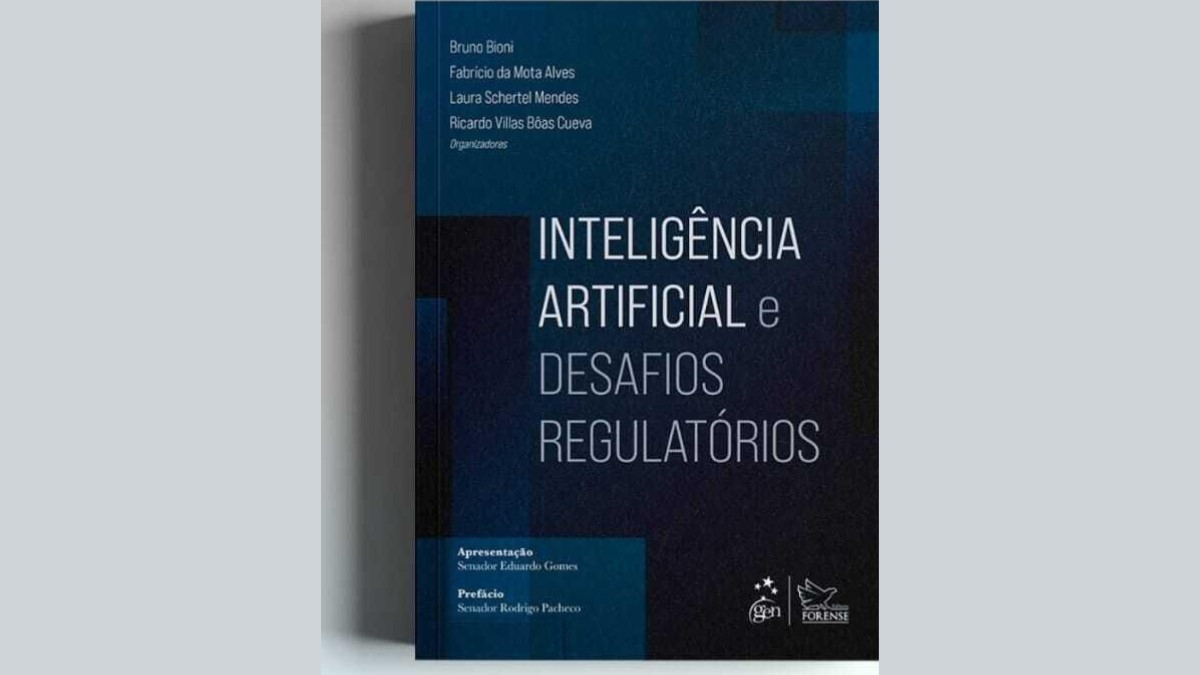
Organized by leading figures in Law, this work proposes reflections on the challenges and perspectives of the AI legal framework under discussion in the National Congress.
The book that analyzes the regulation of Artificial Intelligence in Brazil. The book, "Artificial Intelligence and Regulatory Challenges," was launched on November 12th at the Federal Senate. It is coordinated by Minister Ricardo Villas Bôas Cueva, Fabrício da Mota Alves, partner at Serur Advogados, Laura Schertel Mendes, lawyer and professor, and Bruno Bioni, founder of Data Privacy Brasil.
With a preface by Senator Rodrigo Pacheco and an introduction by Senator Eduardo Gomes, the book brings together analyses from 58 renowned authors on the subject, who delve into how the law can deal with technological transformations in order to consolidate an effective legal framework for Artificial Intelligence in the country.
 “The debate on AI regulation needs to balance innovation and legal certainty. To build an efficient legal framework, dialogue between the State, society, and the technical community must be considered. Therefore, this book seeks to contribute to an ethical and technical reflection on the law and the regulatory aspects that affect technological transformations,” states Fabrício da Mota Alves, partner at Serur Advogados and one of the book's coordinators.
The authors rely primarily on fundamental rights to critically examine the construction of Bill 2.338/23, which addresses the development, promotion, and ethical and responsible use of Artificial Intelligence based on the centrality of the human person.
In over 600 pages, the work proposes a reflection on how the relationship between law, society, and technologies has been constructed. The text goes beyond a normative analysis and explores the regulatory challenges posed by emerging technologies, suggesting that AI regulation depends on a continuous effort that considers social participation and adapts to technological asymmetries.