



 A survey dedicated to understanding consumer preferences in the digital environment revealed that 861% of respondents say they always or usually choose to buy from brands they consider safe and 621% are likely to pay more for products from companies that provide online security and reduce the risk of fraud. The survey was conducted by Serasa Experian, a leading datatech in intelligence solutions for analyzing risks and opportunities, with a focus on credit journeys, authentication and fraud prevention.
The preference for safer brands is a reaction to another fact: concern about fraud, a reality for 71% of those interviewed. “These numbers reflect a growing trend of cybersecurity awareness among consumers, reinforcing that trust is a significant factor in purchasing decisions. In addition, it highlights the importance of a robust online security infrastructure. Companies must invest in advanced layered protection technologies and transparent privacy practices to meet consumer expectations and strengthen their position in the market,” analyzes the Director of Authentication Products and Fraud Prevention, Caio Rocha.
Online behavior
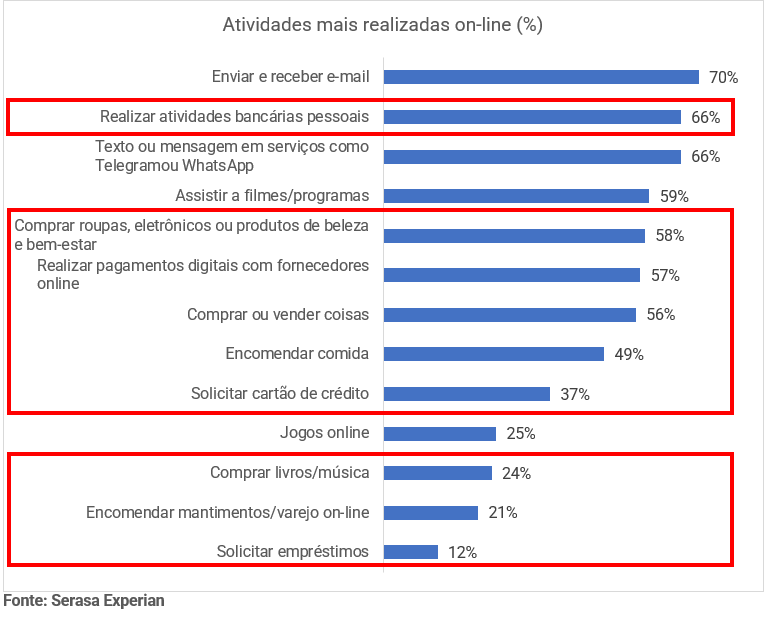
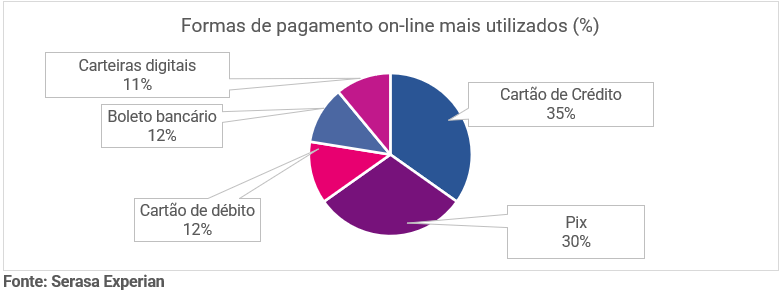
The study also indicated that there are 13 most common activities in online environments, nine of which involve financial transactions. And the most used methods for payments are credit card (79%) and Pix (69%). Check out the complete data in the following graphs:
Security of personal data, digital and physical documents
The survey also recorded a worrying fact: 211% of respondents stated that they had already lent their personal data to third parties, whether to make an online purchase, open a bank account or get a loan. Another fact shows that 141% of respondents stated that they had already had their physical documents stolen or lost, of which 41% were used in fraud.
“Lending data to third parties is an alarming behavior and highlights the need for greater awareness of the risks associated with this practice. On the one hand, institutions must implement robust security and authentication measures, but on the other, it is essential that users understand the risks of this behavior and the best practices to protect their identities online and offline. Data security is not just an individual responsibility, but a collective issue that requires constant action and attention,” warns Caio.
How do consumers protect themselves?
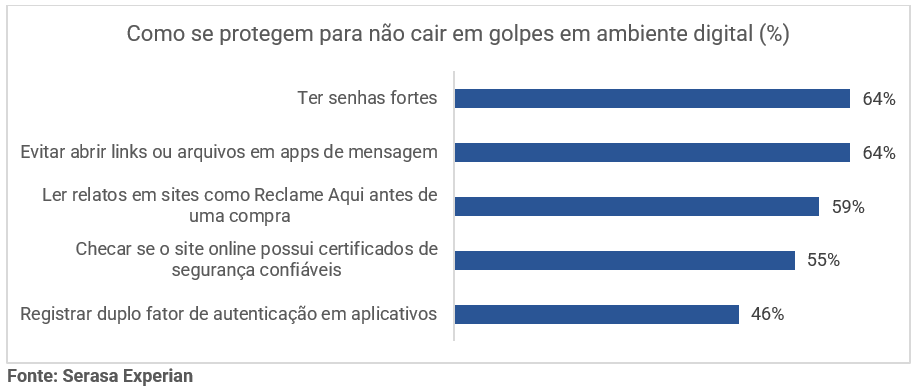
When asked about how they protect themselves in digital transactions, “having strong passwords” and “avoiding opening links or files in messaging apps” were the options most chosen by respondents. See the complete ranking of the most common measures to avoid falling for scams in digital environments:
More data: most common scams
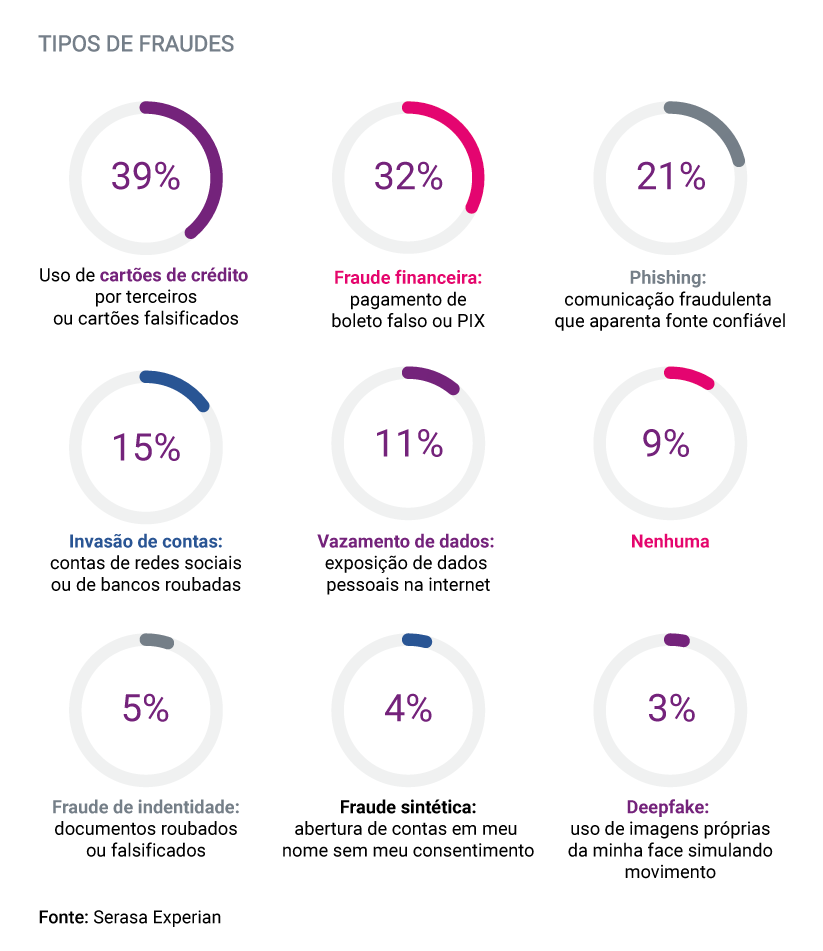
Other information from the survey shows that the most common type of scam reported by respondents was “use of credit cards by third parties or counterfeit cards” (39%). See the chart below for a breakdown of the types of fraud that respondents were most likely to fall victim to:
Methodology
A total of 804 individuals participated in the interview. With a margin of error of 3.5% and a confidence interval of 95%, the survey was applied via an online panel in November 2023 and sought to understand the profile of people who were victims of fraud and their feelings towards scams.
The profile of the respondents revealed that 51% were men and 49% were women, from social classes B (50%), C (32%) and A (18%). The place of residence of 41% of the participants is in the Capital, 33% in the interior of the state and 26% in metropolitan regions. Regarding the regions, 45% of the interviewees are from the Southeast region, 26% from the Northeast, 15% from the South, 8% from the North and 7% from the Central-West.
The average age of respondents was 39 years, and the breakdown reveals 26% aged 50 or over, 22% aged 30 to 39, 20% aged 18 to 24, 19% aged 40 to 49 and 13% aged 25 to 29.