



Considering seven current technology pillars, Trend Micro outlines the industry landscape and cybersecurity challenges
Sales through digital channels have grown in the last two years, driven strongly by the Covid-19 pandemic. In the first months of the contagion of the disease, the logistics chain of storage and distribution of products suffered the impact of the increase in the consumption of some products and the restrictions imposed. Many companies missed deadlines and were unable to maintain the quality levels of deliveries. A war operation was necessary to reestablish the service, with the creation of new logistical and modal routes. But could this scenario have been avoided?
Study prepared by Trend Micro, a world leader in cybersecurity solutions, reveals that technology that already exists today – such as Artificial Intelligence (AI) and Machine Learning (Machine Learning) – can help predict situations like the one we live in, organizing demand and avoiding bottlenecks in logistical processes . O report points to 2030 as the retail decade and describes some scenarios to show that the shopping experience will be made up of many technologies that will work together, such as smart shelves and carts, use of robots and drones in deliveries, and identity tracking through a centralized database.
“Organizations need to prepare for these scenarios and security challenges, because new threats emerge every day. The coming years will be important for creating a safer environment for consumers and for defining a much more agile and innovative retail supply chain”, highlights Cesar Candido, Sales Director at Trend Micro Brasil.
The survey establishes seven technological pillars that would enable the future of retail, already taking into account the expansion of 5G worldwide. Are they:
- Robotization;
- Supply chain;
- Delivery Models;
- Store Experience (smart shelves and carts etc);
- Digitization;
- Artificial Intelligence (AI) and Machine Learning;
- Electronic payment.
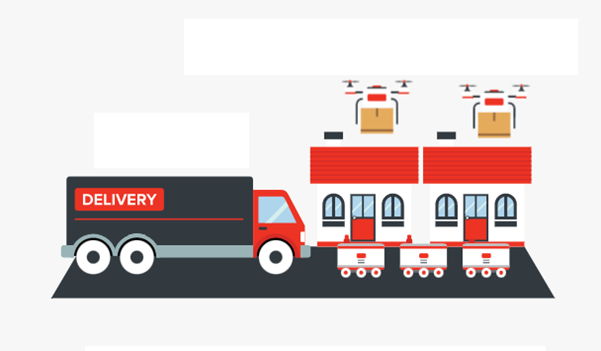
Delivery trucks drive to neighborhoods and drones unload packages
With smart homes and stores, it will be possible to assess consumption and stock levels, and perform predictive analysis, based on behavior patterns. Using drones for product delivery and return will offer a more efficient and faster shopping experience, shortening distances and creating an alternative logistics chain. Trucks can be used both for the delivery of products by drones and to be transformed into mobile mini-markets, with the offer of items at the consumer's door.
All these innovations require a concern for cybersecurity and data privacy, because they are already a reality that will be amplified as we see the threat landscape grow. The retail sector needs to start preparing today for this new normal that has already started to be designed during the pandemic.
Click ON HERE to know all the data and predictions of the report “Safety for the next generation of the Retail Supply Chain”.
ON HERE we have an illustrated case on toilet paper delivery and the role of each facilitating agent and how they would work together.