



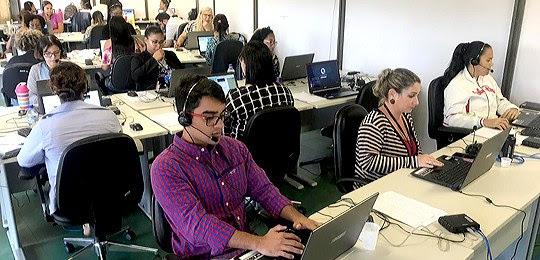
TRE-BA created a personalized service robot called Maia, which helps voters
Investments in service robots and machine learning are already a trend to qualify customer service in the private sector around the world. Now, government organizations have also started to adopt technologies with Artificial Intelligence (AI) to qualify the services provided to the population. The information is part of a global study carried out by global consultancy Gartner.
According to the survey, 36% of government chief information officers (CIOs) who were interviewed in the 2021 Gartner CIO survey indicated that they plan to increase investment in Artificial Intelligence and Machine Learning during this year. Among the solutions identified as the focus of investment are chatbots or conversation agents, with 26% of those interviewed in the survey reporting that they already use it in their projects. The CIOs interviewed 59%'s outlook is to deploy the technology within the next three years, according to the Gartner Digital Transformation Divergence Across Government Sectors survey.

Octávio Carradore, Director of Market Relations at Dígitro Tecnologia
For Octavio Carradore, director of market relations at Digitro Technology, there is a growing interest from the public sector in automation and artificial intelligence solutions that improve service to the population. “Many public bodies deal daily with the contact of hundreds or thousands of people who access the institution through different channels, such as telephone, email and social networks. Without an integrated and automated service solution, there is an overlap of work and wasted energy”, he assesses.
Recently, the Regional Electoral Court of Bahia (TRE-BA) implemented the solution of a personalized service robot. Named Maia, the bot based on the Persona solution serves on the court's website and social networks. According to Rodrigo Rosário dos Santos, TRE/BA technician, the robot interacts with voters, allowing for the issuance of certificates, consultation of the polling station and electoral status, facilitation of payment of electoral fines and transfer to human service through an exclusive service center for this purpose. The experience generated gains in productivity and satisfaction. “There was a significant reduction in lost calls and an increase in service capacity,” says Santos.