



IBM (NYSE: IBM) today announced a new suite of AI-powered environmental intelligence software to help organizations prepare for and respond to weather and climate risks that can harm their business, enabling them to more easily assess their own impact on the planet and reduce compliance and reporting complexity.
Companies are facing damage to their assets due to weather events, disruptions in supply chains and operations, as well as the growing expectation of consumers and investors to act as environmental leaders. Extreme weather, failed climate action and human-caused environmental damage were cited as the top three most likely risks for companies over the next ten years in the World Economic Forum's Global Risks Report 2021. Companies need insights to meet these challenges, but current methods are cumbersome and complex, requiring intensive labor, climate and data science skills, and computing power.
The IBM Environmental Intelligence Suite announced today aims to help companies streamline and automate environmental risk management and operationalize underlying processes, including accounting and carbon reduction, to meet environmental goals. The suite leverages existing weather data from IBM, the world's most accurate provider, as well as advanced geospatial analytics already in use by companies around the world and the latest innovations from IBM Research. This offering is the first to bring together artificial intelligence, weather data, climate risk analysis and carbon accounting capabilities, thus allowing organizations to spend fewer resources curating this complex data and focus more on analyzing it to gain insights and take steps to improve your operations.
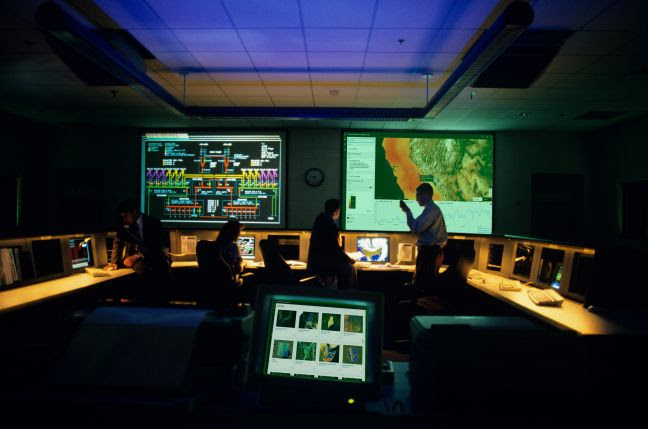
The IBM Environmental Intelligence Suite helps organizations prepare for and respond to weather and climate risks. Credit: IBM
The IBM Environmental Intelligence Suite is a SaaS solution designed to enable organizations to:
- To monitor disturbing environmental conditions such as severe weather events, forest fires, floods, air quality and sending out alerts when these conditions are detected;
- Predict the potential impacts of climate and climate change across the enterprise using climate risk analysis;
- Get insights on possible operational disruptions and prioritize mitigation and response efforts;
- measure and report environmental initiatives and operationalize carbon accounting, while reducing the reporting burden on procurement and operations teams.
The suite offers insights environmental through APIs, dashboards, maps and alerts that can help companies address immediate operational challenges and drive long-term planning and strategies. For example, retailers can prepare for disruptions in their inventory and shipments related to severe weather conditions, or consider environmental risks when defining future warehouse locations. Utilities and utilities could determine where to prune vegetation around power lines or which of their critical assets are at greatest risk of wildfires due to climate change. Supermarkets could get a clearer picture of how refrigeration systems are contributing to their overall greenhouse gas emissions and prioritize hotspots to reduce their footprint.
“The future of business and the environment are deeply intertwined. Not only are companies struggling with the effects of extreme disruptions to their operations due to climate change, but increasingly shareholders and regulators are also looking to companies to take responsibility for how their operations impact the planet.” said Kareem Yusuf, Ph.D., General Manager, IBM AI Applications. “IBM is bringing together the power of AI and hybrid cloud to provide companies with environmental intelligence designed to help them improve environmental performance and reporting, create more efficient business operations to reduce resource consumption, and plan for resilience in the face of climatic disruptions”.
Companies around the world are already using many of the leading weather and artificial intelligence technologies found in the IBM Environmental Intelligence Suite. For example, Brazilian ethanol, bioelectricity and sugar producer BP Bunge Bioenergia is using IBM's environmental data and geospatial analysis to help it better understand its agricultural sugarcane production and optimize its market intelligence estimates in relation to global sugar production. Also, by agribusiness leader Cajamar, to help Spanish farmers improve their profitability and reduce their environmental impact through its digital tool Plataforma Tierra.
The IBM Environmental Intelligence Suite also leverages IBM Research's AI-based innovations that make it easier for data and climate scientists to analyze large sets of environmental data, and a new framework modeling tools used to generate data on future forest fire and flood risks. In addition, the suite will leverage unique IBM Research technologies that apply natural language processing and automation to help companies estimate carbon emissions and identify opportunities to reduce them across their operations or with suppliers.
Environmental Intelligence Suite can be integrated with IBM's broad portfolio of software for greater efficiency in business operations, including IBM Maximo Application Suite to help companies protect and extend the lifecycle of their critical assets, and the IBM Supply Chain Intelligence Suite to build more sustainable and resilient supply chains.
Companies can also take advantage of IBM Consulting's cross-sector expertise to help design, implement and accelerate your environmental business transformation journeys. This strategy includes re-engineering operations, supply chain, emissions management or climate risk reporting and ESG, with the help of emerging technologies to help organizations meet their environmental goals. For example, IBM Consulting is working with Omega Energia, a renewable energy company, to help with more efficient wind forecasting and maintenance with artificial intelligence solutions.