



The JACA platform uses Gemini artificial intelligence to connect, in real time, surplus agricultural production to thousands of families in situations of nutritional vulnerability.
Google Cloud, in collaboration with the development company BlueShift, announced the launch of JACA (Food Journey: Connection and Support). This innovative application was designed to modernize the donation system of the Ceasa Paraná's Food Bank-Comida Boa program. The tool stands out for its integration with Gemini artificial intelligence, responsible for advanced data processing, and for a voice chat functionality that allows donors to register offers of supplies in an intuitive way. The project is an initiative of the Government of Paraná, through the State Secretariat for Innovation and Artificial Intelligence (SEIA) and the Secretariat of Agriculture and Supply (Seab), in conjunction with Ceasa Paraná.
The system acts as a digital hub connecting rural producers and traders directly to assistance entities. By eliminating bureaucratic bottlenecks, the platform allows items with no shelf value, but which maintain full nutritional integrity, to be cataloged via smartphone and quickly distributed to those in need. The proposal combats waste directly at its source, transforming the agency's logistics into a model of social and technological efficiency.
Data intelligence against waste.
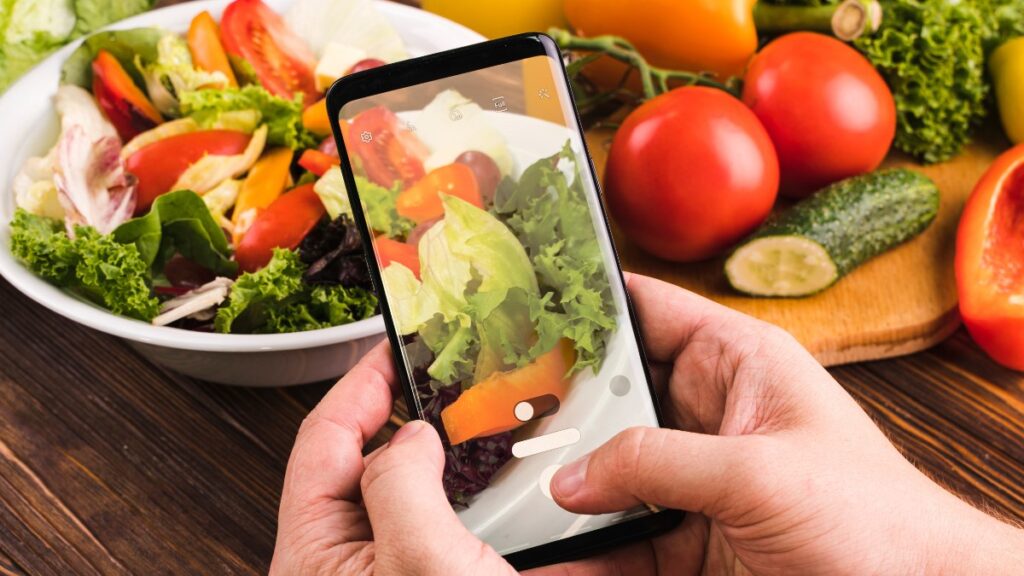
The ecosystem's operation integrates all links in the chain, from agriculture and the administration of Ceasa (the central wholesale market) to soup kitchens and charitable institutions. Through the device, the donor informs the type, quantity, and location of the food using photos, voice commands, or QR codes. Based on this information, registered organizations receive notifications and can express immediate interest, which significantly speeds up the collection of products.
In addition to its user-friendly interface, the solution uses data to map intelligent collection routes, optimizing transportation. Initially, the technology will be implemented in Ceasa units in Curitiba, Londrina, Maringá, Cascavel, and Foz do Iguaçu. The entire cycle is monitored in the cloud, generating automatic reports that guarantee absolute transparency regarding the impact of donations and the destination of the food.
Strategic vision and expansion
For BlueShift, in partnership with Google, which was responsible for developing the software, JACA is the starting point for a nationwide transformation. Although the interface is intuitive, the delivery represents a historic milestone in food waste management. This movement has the potential to inspire other Ceasa units across the country, organizing donations and converting what would be discarded into food security. It is a project that democratizes access to cutting-edge resources to expand social impact and reduce losses in a scalable way.
According to Patrícia Florissi, Google's technical director, the platform demonstrates that technology fulfills its fundamental role when it connects people around a greater purpose. She emphasizes that, with the partnership of the Paraná State Government and the development of the solution, it was possible to transform an idea into a concrete tool to reduce waste and provide sustenance to those who need it most.
Rehabilitation and social impact
The program's results are impressive: monthly, the Comida Boa Food Bank handles more than 600 tons of fruits and vegetables, benefiting approximately 160,000 people. The project also supports an inclusion pillar by employing 80 inmates from the penal system under monitoring. Participants are involved in the selection and processing of items, receiving training in gastronomy and food handling, which facilitates their reintegration into the job market after serving their sentences. With the implementation of JACA, Paraná consolidates a circular economy model in which artificial intelligence becomes a strategic ally in eradicating hunger and improving the efficiency of public logistics.